Any questions? Contact us.

Thursday, April 04, 2013

War like a videogame

GoPro cameras have found a place in Syria too. The results, however, are kind of surrealist. It almost transforms the video below in a picture taken out of a videogame. Something that, on the other hand, it wouldn't be that weird in a conflict that has seen a homemade tank controlled by a Playstation gamepad or a remote-controlled rifle operated from a laptop.

Wednesday, April 03, 2013

Will it be war in Korea?


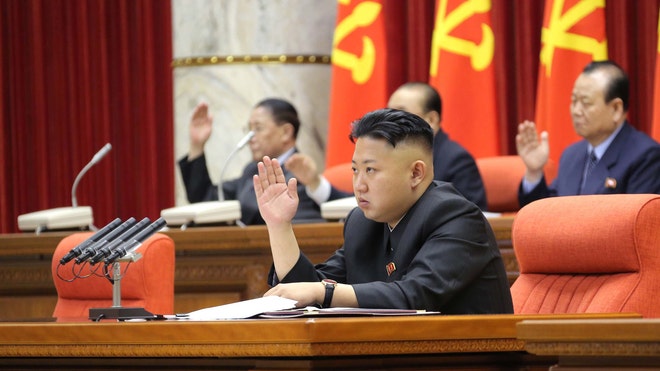
Kim Jong-un seems to be finally wearing his father’s shoes. He is even surpassing the boldness of his predecessor. The young one is pushing an escalation of the nuclear diplomacy the North Koreans have mastered for years. However, the dangers come from the lack of knowledge about the new leaders more than from what it may actually happen in the end.

Most of what is happening now has happened before to some degree. The US and South Korea usually have drills in the region. North Korea usually responds harshly to it. And North Korea usually tests every new Prime Minister of the South when they access the office. That is all according to the script.

It wouldn’t even be the first time they exchange fire. As recently as in the past three years, North Korea shelled a South Korean island, which retaliated. The North also -allegedly- sank a South Korean corvette, an act that didn’t have a military response from the South.

There are, however, too many changes to be able to know what will happen next. There are new leaders in both Koreas and in China. The latter, only ally of the North Koreans, recently distanced from them by sanctioning the Kim regime in the UN for their last nuclear test.

But being more isolated is where NK’s strength resides. The Kim dynasty has made of isolation a weapon and it is partially the reason it has survived for so long. A society open to the world, like Iran’s, wouldn’t have been so forgiving of the difficulties it is going through in exchange for nukes.

The speech of threat to the South forms part of that strategy too. Despite the recent lack of food and famine due to a poor harvest, Kim has been able to keep the North’s society united around the leadership by crying wolf in the form of the US and Seoul.

By keeping a constant message of fear, Kim manages to maintain cohesion among North Koreans. This may be more needed than ever before if the rumors of an attempted coup that surfaced on March 13th are true.

Kim Jong-un, however, has gone a step further with that speech of threat since he accessed the office. He has surpassed his father successfully launching a satellite, test firing another long-range rocket (that failed) and resuming the nuclear program.

These last successful trials (the satellite launch and the nuclear test) may have encouraged the young Kim to impatiently launch threats his country cannot fulfill, like attacking mainland America. The latest moves have been cutting communications with the south, banning access to the joint factory park of Kaesong and pointing the batteries of missiles and artillery to the south.

The truth is no one really wants war. South Korea’s capital, Seoul, would be likely carpeted from the north and little could be done to minimize it. Only during the first hour of conflict, 500,000 rounds of artillery could hit the capital. Conservative estimates suggest a death toll of at least 100,000 casualties only in the city.

North Korea also knows that they would have only 24 hours, maybe 48, until they would be obliterated by the US. The use of nuclear weapons so close to its own population would be suicidal for the north without the intervention of the US. Both Koreas would have too much to lose and little to gain.

Jean Lee, the Pyongyang AP bureau chief and one of the few Western reporters on the ground, said that even amid the latest threats, “Inside Pyongyang, much of the military rhetoric feels like theatrics.”

Business was going as usual and, she noted, “in a telling sign that even the North Koreans don’t expect war, the national airline, Air Koryo, is adding flights to its spring lineup and preparing to host the scores of tourists they expect.” Forcing the south and the US to the negotiation table is what is worth for the North Koreans.

Photo AP
The rest of the actors aren’t any keener to go to war. Japan doesn’t want to be again the target of a nuclear attack and they know they are within the range of North Korean missiles. The US, on the other hand, is fairly safe North Korea can’t hit its territory. But being in withdraw from Iraq and Afghanistan, it doesn’t make sense to get involved in what could be the bloodiest conflict since 1945.

On the other side, China is not interested in a conflict in the area. Focused on the economy, a war in the region would threaten the growth of the country. An influx of refugees inside its north-eastern border is an added problem. Added to that, if North Korea is annihilated, it could mean US troops on its border while Kim’s regime is now a firewall that would be disadvantageous to lose.

All things considered, recent history tells us it is not likely this will escalate into a full blown war. But as Foreign Policy puts it, “for half a century, neither side believed that the benefits of starting a major war outweighed the costs; the worry is that the new North Korean leader might not hold to the same logic, given his youth and inexperience”. Kim Jong-un is not crazy as some draw him, but our best bet is hoping he is not suicidal either.

Friday, March 29, 2013

France in trouble


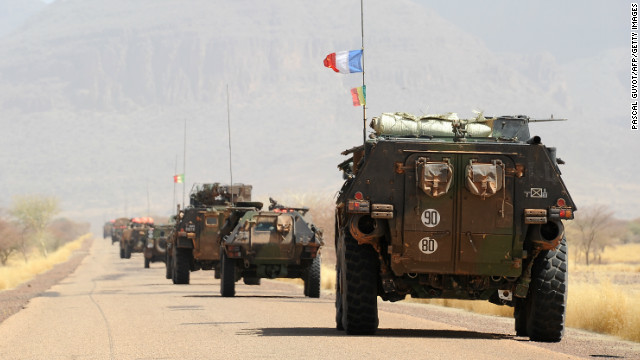
France knew it was stirring a hornets’ nest when it invaded Mali earlier this year. So did the USA and the EU. Yet they pushed through and eventually, together with several African nations’ troops, managed to achieve victory. François Hollande even went to Mali to get a photo-op on the trail of that moment.

But that photo and that victory are as close to reality as George W. Bush’s photo aboard a US carrier with the “Mission Accomplished” banner behind him. To be honest, the difference is that this time they know it. And they fear it.

Winning is easy. Keeping the spoils of war is much more difficult. Ask the Americans in Iraq. That is precisely what France is trying to avoid, getting into another Vietnam -yes, they have the same example in their history books too.

Even for the invasion, France had to stretch its forces. It needed the support of the USA and other European allies if only to fill auxiliary roles. Holding the ground, even just leading a coalition of African forces, is proving more challenging.

The land to patrol is vast -as demonstrated by the attack on the gas refinery in Algeria. The Islamists are also well armed; these are not Syrian rebels. They have powerful friends and some of them were armed by Gadaffi to fight against the same French and Americans they are fighting now just a few months ago.

Even the fighting is not over yet, as demonstrated by the recent deaths of African and French soldiers in combat missions. Not in ambushes, combat missions. And even a really weak al-Qaeda is being able to maintain a guerrilla war.

French convoy in Mali/Reuters
That is why France wants out. And they want it fast. Hollande’s Government is pushing the UN to create a rapid reaction 10,000-strong multinational force, heavy armed and under French leadership if needed. But under the UN flag and with bigger contributions from other nations.

However, those other nations are likely to be African or Asian. The US, the UK and other European countries pledged only support aid. Canada has already ruled out combat roles for its forces. A picture that sounds all too familiar.

Thursday, March 21, 2013

Syria and the diplomacy game

Syria has become a broken toy no one wants to get their hands on. Truth be told, the situation has escalated and it is way more complicated now. What used to be black or white has now dozens of shades of gray in between. The Balkanization of the conflict has derived in a war with dozens of splinter cells with targets too different between themselves.

There is no more a homogeneous opposition. Some groups want to oust Assad. Others just want to defend their neighborhoods. The Kurds are happy taking care of their own business watching the rest killing themselves. And then there are the ones looking for a Yihad. For those ones, the -theoretically- socialist and laic regime of Assad is as good as a target as anything else.

That is why steps are given carefully. Slow and shy attempts on all sides. Take for example Russia, who started championing Assad. Now they are rather looking for a golden retirement for him and his family in a third country.

We have as well the Arab states of the Gulf. They are between a rock and a hard place. On one hand they would love nothing more than getting rid of Iran’s friend in the region. On the other hand, they are frightened a revolution like that could caught them at home.

In a similar place is Israel, whose is irritated by Assad but fears who could come after him. They have the bad experience of Egypt, where Mubarak was a manageable leader that didn’t give them too many problems. Things have changed with Morsi, if only on the public arena.
Photo: Facebook group

The last one to risk a move has been the USA, announcing they will help directly the Syrian opposition. With a clear red line: no weapons or training. Just medicines and food to avoid future problems.

The Americans don’t want another Afghanistan or Libya. In the former they helped the Taliban; in the later they helped the Gadaffi opposition. Both groups turned their backs on America, one of them in a war still going on, the other one with the attack on Bengazhi’s embassy and Mali.

The Syrian opposition however thinks that all that about food and medicines is good intentions but nothing more. A video uploaded to Facebook shows how much they esteem the help provided by Washington.


However, the lack of a pipeline of weapons from the West isn’t stopping Syrians of getting armed. Recently some images of what looks like Chinese surface-to-air missiles appeared online. How they got there is a mystery. But even without sponsors, Syrians have demonstrated a high dose of imagination. One of them is a Playstation-controlled tank they created out of scrap pieces. That is bringing the game of Libya to a whole new level.


France and the UK have been trying to solve that. They are the top supporters of lifting an EU-embargo on Syria. They are even considering going freelance and arm the rebels themselves, even if that means defying the European Union.

Several Gulf states, however, keep funding and arming rebel groups. Qatar and Saudi Arabia are among them. This, again, could turn counterproductive in the end for the Americans. Without a direct control on the arms pipeline, those weapons could end up in the hands of groups that aren’t so worrying for those Muslim states, like al-Nusra. And this would be the same problem all over again, only that way closer to strategic allies like Israel.

Wednesday, March 13, 2013

Wasting Money


Over 12% of the Money spent in rebuilding Iraq has been wasted. That is the conclusion reached by the latest enquiry on the matter by the USA. And it could be worse.

Nothing is more painful for Americans than paying taxes. That is why the “taxpayer’s money” is scrutinised so closely. And the quantity wasted this time is considerable: more than $8b.

An estimation, by the way, that could be short. Stuart Bowen, head of the committee redacting the document, told Wired that the total could be much more because they only could audit superficially the account. An account that only includes money spent on reconstruction, not the overall military operation cost which ascends to $800b.

To the 12% of the $60b for rebuilding Iraq, we should add the unknown amount wasted in Afghanistan already. Last year an independent investigation by the BBC revealed that a “significant portion” of the $400m invested in 2011 alone was going to be lost.

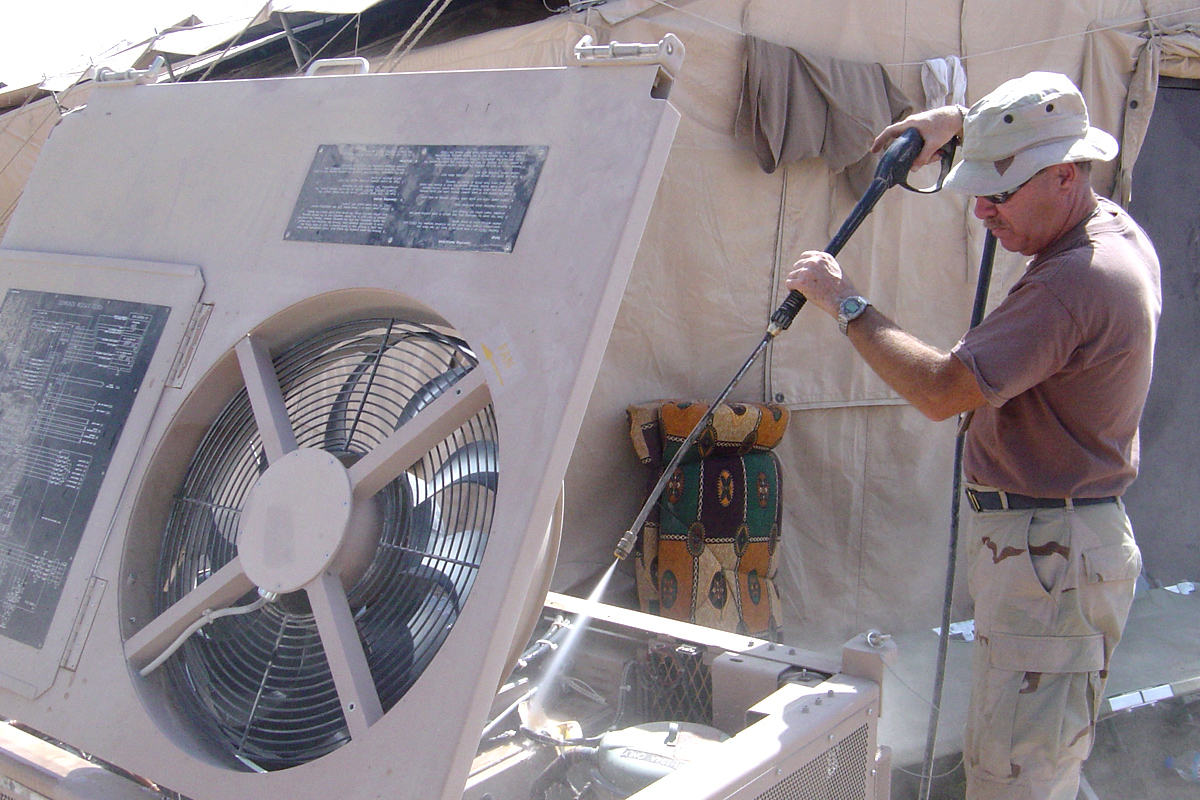
Photo: US Army
One thing you can’t deny them is creativity when it comes to useless spending. Sometimes it was in the form of unfinished projects. Sometimes by paying contractors that then didn’t meet the requirements. There is even a case of a school that wanted $10,000 for refurbishment works and got $70,000 without knowing well why.

Probably the case of the “Sons of Iraq” program is especially relevant. It was seen as a expense to avoid expenses. Planned by the now villain Gen. Petraeus it focused on paying of Sunni groups in Iraq to work for the Americans instead of against them. Bribe them, one could say. Those bribes added up to $370m between 2007 and 2008. But worst of all, without being clear if it was a success, they exported the system to Afghanistan.

It is impossible not to think other uses that money could have had. $8b is a lot of money. Enough, for example, to pay for five more missions of the space shuttle. Or for almost a whole year of the Environmental Agency’s budget. Instead they are collecting dust in some warehouse in the middle of the desert.

Published first on Iniciativa Abierta in Spanish


Are you afraid? Well, this works in that way. First you do what scares you and it's later when you get the courage
Twitter Delicious Facebook Digg Stumbleupon Favorites More

 
Worldwide blog©, WGMreports© and the texts included here are copyright of Javier Garcia Marcos.
All the pictures used in this blog are property of their respective owners. Any innappropiate use of them is unintentioned. Any image or link used without permission will be removed.
Powered by Blogger