Any questions? Contact us.

Showing posts with label Latin America. Show all posts

Friday, June 21, 2013

Turkey and Brazil: the connections and the mismatches

Miles apart, they don’t share language, culture, religion or a common colonial past. But despite that, both Brazil and Turkey are under unrest at the moment. Citizen movements that mirror on the Occupy movement and the Arab Spring have flourished and are gaining momentum from Rio to Istanbul. But what makes them different and what do they share?

Differences

Where they come from and where they go to
Brazil and Turkey were never in the spotlight. They always have been important regional powerhouses, but they lacked the support of an important global player like the EU. However, in the past decade both countries have gained relevance and economical power of their own and now can fight as equals with the EU (Turkey) or even in a global scene (Brazil).

However, while Brazil is much more independent to act, Turkey must look closely its actions if it wants to join the EU. The backlash against the protests has not improved the prospects of accession to the Union for the Turks.

The flame and the spark that ignited the flame
In Brazil it always has been about money. It all started with a 10-cent hike in public transport prices. But soon it grew to cope with the widespread frustration over a whole set of economic issues, from high taxes to wasteful expenses for two major sporting events (2014 World Cup and 2016 Olympics).

CS Gas canister; made in Brazil, used in Turkey
In Turkey it always was about defending secularism. Sure, the spark of the unrest was the proposal to uproot some trees to redevelop the area into a mall -or a mosque. But deep within the protesters demands is the fear of a Islamisation of Erdogan’s government. Recent laws passed with restrictions on the sale and advertising of alcohol and an attempt to limit women's access to abortion are deeper roots into the protests than the roots of the trees in Taksim. 

In both cases, however, the initial spark that ignited the unrest was a mere catalyst of a reaction years in the making.

The countries’ leaders
The Turkish PM Recep Tayyip Erdogan has become the target of the ire of the protesters. They blame him and his party for his policies. The response from Erdogan has been a stronger crackdown on the protesters. It is now a very public struggle: Erdogan and his party against a myriad of other groups that include ecologists, LGBT rights supporters and Kurdish independentists among others.

On the other hand, Dilma Rousseff, a former leftist guerrillera who was imprisoned and tortured during Brazil's 1964-85 dictatorship, hailed the protests for raising questions and strengthening Brazil's democracy. Unlike Turkey's leader, Rousseff remains popular among many of the protesters.

Epicenter vs. dispersion.
Turkey has a clear HQ for its unrest: Taksim square. In Brazil it is a bit more distributed. Sao Paulo and Rio have held multitudinous demonstrations that travelled through the city. In the case of Turkey, it has been a fight -and a proper one- for the control of Taksim square, the symbol of the protest and where it all started.

Similarities
The protests started outside the capital
All the previous revolutions started and took shape in the country’s capitals. Tehran, Cairo, Athens, Madrid… Both Brazil and Turkey have administrative capitals that aren’t the main city in the country. And for both of them, it wasn’t in the capitals but in those others main cities where it all started. Rio and Sao Paulo in Brazil and Istanbul in Turkey have been from the beginning the beachheads for their countries revolutions.

A growing middle-class…
The fast growing economies in Brazil and Turkey have created a new middle-class that previously was really small. This new middle-class is better educated, better informed and more ambitious. The problem is that the upper tiers in the Turkish and Brazilian societies have won much more purchasing power than the middle-classes; thus widening the gap. This is the opposite to the case of Spain and Greece, where no one has won purchasing power (there it is a case of the middle-classes losing more than the upper tiers).

…but also growing inequality
Despite the economic growth, the gini index has gotten bigger for both of them. This shows the increasing inequality that the population in both Turkey and Brazil are facing. The gap between the top and the bottom is getting wider, and the scale is stretching so much that the space in between for the middle-class is endangered.

The police crackdown on protesters
Both unrests have been met with equal hard measures. Batons, water cannons, rubber bullets and gas canisters have been used by both governments to suppress the demonstrations. In an episode of twisted irony, protesters in Turkey discovered that the CS gas canisters used by the Turkish police were made in Brazil.


Both police forces have been also strongly criticized for the use of excessive force. In Turkey, the police union said that at least six policemen had committed suicide due to the stress that they were being put under. In Brazil, the video of a cop refusing to crack down on protesters and being fired on the spot by his superior has gone viral on YouTube.

Friday, October 30, 2009

Friendly fire 30/10/09

- Iraq wants to get into the nuclear club. Yeah, that’s right. Not Iran this time, Iraq.

- Micheletti and Zelaya achieve an agreement for an exit to Honduras coup.

- The EU gets an only strong voice against climate change. Well, sorta.

- Israeli envoy to the UN says that the Human Rights council has give its back to the same values it defends. I think it’s something about Goldstone report, but not in the same way as everyone else aknowledges it.

- Medvedev opposes to the rehabilitation of uncle Joe. Traitor! He should be executed…


Did you like it? Share it Delicious

Monday, October 05, 2009

Friendly fire 05/10/09

- Polling round: The Yes wins in Ireland. The Socialist Party wins in Greece. And Rio defeats Chicago, Madrid and Tokio in the race for the Olympics.

- Should Roman Polanski be above the law?

- While waiting for the 2009 Nobel Prizes, here are 2009 Ig Nobel Prizes.

- Seriously, what's wrong with Asia? Earthquakes, floods, tsunamis...

- Israel, in Honduras too? Unlikely.


Did you like it? Share it Delicious

Monday, September 28, 2009

Micheletti raises the stakes

The situation in Honduras is hanging in a cliff. In a matter of days -ten- it could evolve into an international issue. A serious one.

Since last June, when President Manuel Zelaya was ousted, the country has lived in turmoil. Now, coinciding with the petitions from the UN to restate the constitutional order and Mr. Zelaya in his job, things are heating up.

The EU and the USA have both condemned the coup, but few less has been done. America -responsible for the 75% of Honduras’ exports- has been static doing nothing more than the initial statement. Latin American countries on the other hand have been the biggest supporters for Mr. Zelaya. They were countries like Argentina, Mexico, Brazil, Venezuela and -the only exception- Spain, who stepped up and called their ambassadors.

After returning to the country, the ousted president seeked refuge in Brazil’s embassy in Tegucigalpa. Knowing this, thousands of Mr. Zelaya’s supporters gathered in front of the embassy where he gave a speech from one of the balconies. In the demonstrations following it, dozens were detained and injured and at least three people have died since the start of the unrest.

The right and the military are still, clearly, getting nervous. And acting erratically. Immediately, Micheletti, the interim president, has started a state of alert. Nowhere says that, but it is what it looks. First, Honduras denied visas to two workers of the Spanish embassy going back from holidays and four OAS officials. A fifth one was allowed. But major concerns are within the Honduran population.

Two media have been closed; the TV broadcaster Canal 36 and the radio station Radio Globo, both pro-opposition. In addition to that, civil rights have been suspended. Among them are the rights to free speech and public gathering.

But even more important might be the decision to break diplomatic ties with Brazil. After Zelaya seeked refuge in Brazil’s embassy, and after the first clashes, the building was seized. Electricity and water supplies were cut and no-one was allowed in again. It also has been bombarded with LRAD weapons and tear gas.

Now, Micheletti’s government is giving Brazil’s diplomatic body 10 days to leave the country and formally, has denied the right of an embassy. Honduras interim government has denied any intentions to storm into Brazil’s embassy after those 10 days, but the future of Mr. Zelaya remains a mystery.

Here, a video from Al Jazeera.


Did you like it? Share it Delicious

Friday, September 18, 2009

Friendly fire 18/09/09

- Top destination for spies.

- Top destination for arms dealers.

- Top destination for IAEA inspectors.

- Future top destination for IAEA inspectors.

- Winter top destination for Israeli jets. Unexpected guests not welcomed.


Did you like it? Share it Delicious

Wednesday, September 09, 2009

Sarko secures the Brazilian job (now, for the Indian job)

Brazil announced on Monday the decision to purchase 36 Rafale for the F-X2 program. The operation also includes 12 Brazilian Embraer KC-390 tanker-transport planes to be exported to Paris, a lot of tech exchange between the two companies and joint ventures for the future. The plan can be worth $7 billion.

French President Nicolas Sarkozy acted as a chief negotiator for Dessault, a political pressure difficult to match by the other bidders of the contract (the Swedish Grippen and the American Super Hornet). As Robert Wall writes in Aviation Week’s Ares blog, “French president Nicolas Sarkozy has been aggressive -some may say shameless- in acting as the chief salesman for the country’s aerospace and defense industry”.

The latest visit to Brazil of Mr. Sarkozy was perfect to seal the deal. But political pressure hasn’t been the only player on the bid. A great part of it came from the tech transfer the French are happy to make, which American government isn’t. The Grippen has also American components that would be subject to the same restrictions. “What’s important for us is to have access to the technology to make this plane in Brazil,” said Brazil’s President Luiz Inacio Lula da Silva.

Deal is not closed yet and other bidders may still get a part of the cake. But for now, a few questions are on the air. Stephen Trimble from the DEW line draws them:

1. Will Dassault agree to open a final assembly line for the Rafale F3 in Brazil?
2. Will Embraer invite Dassault to join the supply chain for the KC-390?
3. Does this potential deal pave the way for Embraer and Dassault to collaborate on next-generation projects, such as a fifth-generation fighter and a 737/A320 replacement?
4. How will Brazil's decision to select the Rafale play in India, which is considering all of the same bidders for the far more lucrative MMRCA project?
5. Is Switzerland now Saab's best (only?) chance to win an export contract for the JAS 39 Gripen?

From all of them, no. 4 is probably the best questions of all. India's program MMRCA is looking for a 4th generation plane able to fit in the gap between their most advanced Su-30 and their light attack jets Texas LCA. A fighter to substitute the Mirage 2000 now in duty.

MiG has offered the MiG-29 OVT (aka MiG-35) but lacks the problem of availability, as the Russians are uncapable of delivering the planes before 2013-14. The Eurofighter Typhoon, the F-16 Block 60+, the already on use updated version of the Mirage 2000-5 and the F-35 are over the table too. But as with Brazil’s deal, Boeing’s Super Hornet, Swedish Grippen and Dessault’s Rafale are the best positioned. Again, the Grippen is behind for its uncapability of operating from carriers. But this time is a real deal.


Photo: Dessault

Did you like it? Share it Delicious

Friday, July 31, 2009

Holidays round

I’m not too eager of stopping working for long (journalism is more a lifestyle than a business, although others may have a different opinion). But sometimes it’s good to take a break. And that’s what I’m going to do from today.

Meanwhile, here are the main issues to follow during the next two weeks:

- Iraq: No more multi-national task force in Iraq. Instead, from today on, it will be just a sole force of one country, exclusively American.

- Iran: Yesterday was the 40th day anniversary of Neda Soltan’s death. Tehran saw again thousands in the streets mourning those killed in the repression by the government forces. And the Basiji, again, fought them back violently. At least 20 people died during last month post-electoral clashes.

But the scars are still fresh. An Iranian court urged the police to present charges against those detained (hundreds of them) and finally around two dozens will be prosecuted. Another prominent reformist was moved from his cell to a government house where he will be under house arrest.

It’s to expect a surge in the clashes again for the next weeks.

- Afghanistan/Pakistan: Helmand offensive still goes on. Yesterday, two British soldiers were killed and the casualty report doesn’t make anything but grow. The near Presidential election, due the 20th of August, promises a few busy weeks ahead. Karzai will win again, almost for sure, but his popularity is decreasing. The Talibans have already called for a boycott of the polls.

Meanwhile, in the southern country the drone wars go on. A recent attack killed, according to the CIA, one of Osama bin Laden’s son. The operations in Swat valley, carried on by Pakistani militaries with assistance from the Americans, have allowed thousands of refugees to go back to their homes, avoiding what could have been the worst refugee crisis since Rwanda.

But the Taliban menace persists. Pakistan signed yesterday a deal with Tajikistan to secure the region, cooperate in security matters and blahblahblah. So beautiful; the ‘Stans fighting together...

And just in case the Taliban weren’t enough trouble, a separatist group from Balochistan started to attack foreign aid workers in the area.

- China: The Uighur revolt still is on the frontpages. China revealed last week official numbers for killed and detainees. Detentions that today are still going on.

Also abroad. While the Chinese government was exchanging opinions with Obama and messages with Taiwan -both signs of aperture of the regime-, it was angrily criticizing the words of the Uighur exile leader and the projection of an Uighur documentary in a movie festival in Australia.

Australia, by the way, is engaged in another nasty diplomatic clash with China regarding a few wallabie employees of Rio Tinto detained in a spy case. The problem for those employees is that they revealed data from Chinese companies to their partners abroad. Data that is open source in China. This puts over the edge hundreds of consultants. What to do now? Where is the limit about what to publish and what not?

And if they survive that, still can be themselves into a collective illnes inside their company.

- Horn of Africa: With the comeback of somalian pirates, the region should have enough. There is even a new videogame about it. But this is Africa. There is never enough trouble.

Knowing that -or maybe collaborating to that- the USA has intensified his pressure over Eritrea and his support for the Islamist groups operating in Somalia. Yet a hypothetic deal sounds like a far dream.

Meanwhile, America plays a wild card strongening his presence in the area through the semi-autonomus region of South Sudan. Members of the newly created South Sudanese Air Force -no planes yet- were training this week in the USA. South Sudan is undergoing through a rearming process as the recent images of Faina’s tanks found in the region prove it.

- Rest of Africa: In Nigeria, clashes between Islamist militias and government forces in the north of the country left 150 deaths. The ambushes are still taken place.

In South Africa, newly elected President Zuma has abruptly ended his honeymoon with his voters. A massive strike shook the country during this week.

Meanwhile, a new campaign has been launched by a Namibian NGO. “Lords of bling” tries to remind the African leaders their promise to spend at least a 15% of the money in healthcare, a measure long forgotten by most of the African Union signers of it. The signer Akon has designed this song to remind that fact to the African presidents.


- Israel/Palestine: The settlements center the debate. International pressure grows as the US envoy to the region increases the talks too. Netanyahu agreed yesterday to destroy 900 houses in an East Jerusalem colony.

Inside Israel sensibilities around this are also changing. Some analysts consider Israel’s image abroad is being heavily damaged by the settlements (smart guy). Some settlers even are speaking out and admit they would leave in exchange for the money spent in their homes and similar conditions somewhere else inside Israel. Some others, not so.

What doesn’t change is Netanyahu’s hawkish government. The last idea is ask demand the Netherlands and the UK to stop giving funds to the NGO Breaking the Silence, who has done some research of alleged Human Rights violations in Gaza by the IDF. Next will be to point European governments how they should spend their money.

And meanwhile the Netanyahu’s government asks Holland and the UK to stop funding pro-Human Rights NGOs, their allies from the far right ask the IDF soldiers to cover up for the abuses committed in the West Bank.

On the northside, the IDF has been put on alert after Lebanon forces were movilized too. However, Israelí officials consider unlikely a reedition of 2006 Hezbollah-Israel war, specially now with so many international forces in the zone.

On the other hand, in Gaza, Hamas starts to apply their particular vision of government. Up until now, Palestinian women could consider themselves lucky. I was actually talking about this recently with a Palestinian friend. While Saudi Arabian women cannot drive a car or meet with strangers, Palestinian women can do that and even wear trousers, the head uncovered or -if they want, and also the men- buy alcohol.

All that could be about to change. A judge has ordered in Gaza to all the female lawyers to wear a head scarf. It is just an example of many more that are showing Hamas’ Islamist hand in Gaza. Like restrictions with alcohol or the new religious police. Here an Al Jazeera video on it:


- Latinamerica: Honduras’ political turmoil doesn’t look well. But at least negotiations are moving up. Slower than a sloth, but moving up. Zelaya is in Nicaragua’s border from where he visits periodically his supporters. Meanwhile the interim government is more and more in lack of support. Abroad, the USA revoked several diplomatic visas. Internally, the Army admitted the predisposition to accept a unity government with Zelaya in front. Last word is Micheletti’s.

Further to the south, Colombia and Venezuela are again fighting. This time, a few Swedish grenade launchers were the detonant of the diplomatic turmoil. The weapons, sold by Sweden to Venezuela, ended up being discovered in a FARC’s camp. After that, the usual crossfire between governments and Hugo Chavez’s usual recall of ambassadors.


And basically that’s all. Add some narco fights in Mexico and a political fight in Burma (Google this, I’m tired of linking news today) and you have enough to be busy for these two weeks I’ll be out.

So, until then... Be good, have fun, and don’t do anything I wouldn’t.


Did you like it? Share it Delicious

Monday, July 06, 2009

Failing

It was crystal clear that Zelaya wasn’t going to be able to get in Honduras easily. The plane were he was traveling had to change its destiny and land in El Salvador after that from Tegucigalpa it was denied the right to land.

Well, technically it wasn’t, but they warn them over firing at him if he tried. Like Pilates, Micheletti washed his hands by saying he didn’t want a dead ex-president of the Republic lying on the airport. Ousted yes; death not, that’s not cool. In the end, El Salvador was only another stop in Zelaya’s trip. Last one will be -for now- Washington.

Meanwhile the OAS expelled Honduras from the organization after the coup. Zelaya could count on that. But the promised support from Latin American leaders was more symbolic than real. They indeed traveled to Honduras with Zelaya, but in a different plane. Just in case the military got nervous and shot them down.

And according to what is going on in Honduras streets, they did well. It’s clear when the military is nervous because the casualties start to appear. In Honduras there are already two, one of them a 15 years old boy. To them we have to add several dozens of detainees and injured in the clashes.

But Honduras is not Iran, and here there is no Twitter revolution like with Mousavi supporters or like in Moldova. The streets shout, but the net stays almost quiet.

And it’s not for ammo to throw at the supporters of the coup. The coup has every day more similarities with the usual overthrows in Latin America, including the positioning of the Church in favor of the military. Even Micheletti, the new president, is a former aspirant to the power.

But the cyber-response of the Hondurans is in line with the coup of the military: equally bad. The coup itself is badly backed with arguments. It is not because of a referendum, or because a personal will of Zelaya to overstay in power. It’s much more innocent: just a question over a question.

And even if the reformation of the Constitution would be approved, it wouldn’t have any effect on Zelaya. He will step down as president in 2010 and by then there only can be talks about the talks. Again another proof of how tense and nervous is the military.

Even though the courage is a pre-requisite for their jobs.


Photo: Orlando Sierra / AFP - Getty Images

Did you like it? Share it Delicious

Wednesday, July 01, 2009

Friendly fire 01/07/09 (Honduras edition)

- Zelaya will address the General Assembly of the UN and then will go back to Honduras backed by several Latin American leaders. In Tegucigalpa, they warn over an armed resistance against any international action against them while announce that without those actions Zelaya won’t be reinstated, but detained instead.

- Spain recalls their ambassador from Honduras. It’s the first time they do it in seven years.

- The OAS demands the immediate restitution of Zelaya as president in three days.

- An interesting article from Gustavo Duch Guillot: "Que nada pueda cambiar". (Spanish)

- The cold war between Chavez and Obama takes place over Honduras.


Did you like it? Share it Delicious

Honduras 2009: naivety and utopias

The following article is the first collaboration to Worldwide (and let’s hope, more to follow) from Benjamín Blanco Abarca, journalist at the International desk in the newspaper La Tercera from Chile.


Benjamín Blanco Abarca, SANTIAGO DE CHILE

What happened these weeks in Honduras show us the ingenuity of the leaders in the central Latin American country, one of the poorest in the continent.

On one side we have a democratically elected president, José Manuel Zelaya Rosales, who was trying a reform to the Constitution without the support from the Congress, the military or the judges. A utopia.

On the other side there are the powers named before, who made a coup without the political scoop to be aware of the outcome of their actions, including that neither international organization nor any country would recognize them as a legitimate government. Honduras is right now a pariah state, as they were 20 years ago South Africa, Chile, Israel or Taiwan. Today, when all the region’s countries have democratically elected governments, pretend a coup is a utopia too.

Zelaya, a politician from the right wing Liberal party, was sworn in 2006. He ruled the country for two years under the parameters of his collectivity. But after getting closer to Hugo Chavez and master himself in the Bolivarian Alliance for the Americas (ALBA for its acronym in Spanish) sponsored by the Venezuelan president, Zelaya made a 180 degrees turn in accordance to the Administrations close to Chavez, including proposing a constitutional reform to be reelected.

The coup supporters argue now that attitude of Zelaya, close to Mr. Chavez, to justify the coup itself, that with a series of tricks, they call “constitutional succession”.

However, is vital to take Hugo Chavez out from the equation

What Zelaya pretended to make last Sunday was a non-binding referendum on the possibility of, in next December’s elections, having another box where people could express themselves about the question of a possible modification in the Constitution. Taking into account that the elections are due at the end of 2009, and letting aside the hypothetical results of the query that never was made, they were still six months until the elections. Time more than enough to discuss these issues with Zelaya and seek a negotiated solution to the troubles Zelaya was getting the country into. Even José Miguel Insulza, General Secretary of the Organization of American States (OAS), was traveling to Tegucigalpa to mediate in these affairs.

Not to mention about the execution of the coup itself. Decades of history and stories about coups in Latin America apparently haven’t teached anything to the ones now in power in Honduras.

In the midnight of last Sunday, shots between the presidential guard and elite troops from the army woke up Zelaya. He was detained under the effect of a warrant from the Supreme Court who blames him of disrespect to the Constitution. But he is not detained, as it should had been if that order really existed, he is brought into an airport and sent out of the country. Costa Rica, by far the most democratic country in the region, assists Mr. Zelaya in quality of “guest”.

Later the tanks invade the streets, electricity supply is cut and there is a media blackout. Only Radio America transmits, in favor of the coup, informing every half an hour about the election of Roberto Micheletti, speaker of the Congress and also from the Liberal party, as new president of the country. Meanwhile, all the countries around the world, from Russia to the USA, going through Brazil, Chile, Mexico and Argentina, condemn the coup.

Later in the afternoon, the military and the coup supporters release a letter in which Zelaya allegedly certifies his resignation (why then detain him if he resigned?). But that night they say Zelaya was pretending to dissolve the Congress after the referendum.

But if there is something clear in all this is that this is new for America as a continent. Never before the USA had been against a coup in his backyard and never before had been such unanimity in the rejection of the coup.

What will happen now? Any scenario will be new and will set a precedent. The most plausible one can make the coup supporters to back down while Zelaya will return to the country and will announce elections in the next months.

However, Honduras will lose its credibility and unsuspected figures can take benefit from their actions during this crisis. For sure Insulza, Costa Rican president Oscar Arias, Nicaraguan president Daniel Ortega and of course, Obama, will be in the winning side (whatever happens in Honduras).

In Honduras, however, everyone will pay a high price for their naivety.


Photo: Orlando Sierra/AFP/Getty


Did you like it? Share it Delicious

Tuesday, April 28, 2009

Schwarzenegger in "State of alert"

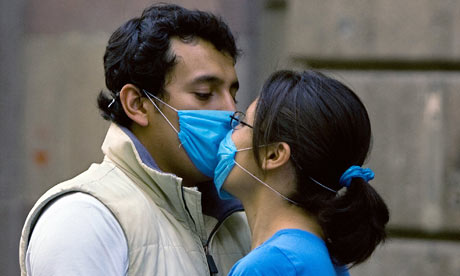
No, relax. Governator is not gonna make a new movie. It is just that his state, California, is under health alert because of the swine flu.

Media has jumped in like hyenas over the influenza cases over the world. In mostly of the cases, with excess of alarmism. Just like it was with the Y2K, the mad cows, the avian influenza or the contaminated pork in Ireland last summer. Let’s hope that the strong survivors from those dangers to the humanity (us) will be able to survive too this new threat and repopulate Earth.

First, there are three numbers to consider: possible affected, confirmed affected and deaths. For now, although there are about two hundred deaths in Mexico, only two dozens are confirmed are directly related to the virus. And even for those cases, it is because of the deficient health system of the Aztec country rather than due to the influenza itself.

And that (two hundred dead at max.) is in a country with a capital of more than 30 million inhabitants. Make the maths. Well, here they are: less than a 0.0001% of the population of Mexico DF. In Western countries, the threat should be even smaller than that percentage.

As today, the flu is a “pandemia” with 300 confirmed cases (mostly in Mexico) and 3,000 suspected. Cases are in Europe, USA, Australia, Russia and Argentina.

But if something has been proven with this “pandemic” disease is the value of Twitter, Wikipedia or Google Maps to hunt down the news minute to minute.

Alarms for new cases are diary, but many end up being normal flu or nothing at all. There is too much histery for too few viruses. As an example, Spanish tourists arriving home from Mexico were more afraid in Madrid watching the news than in their holidays.

And to complicate everything even more, media is not sure that it is a pig disease. It is still unclear if it was transmitted to humans from pigs or if the virus mutated inside the patient zero (who, by the way, still is not confirmed too) Some experts suggest to rename it as “North American flu”, as the “Spanish flu” was called in 1918 because it was discovered there.

But of course, you can always try to look in another intricate way trying to find conspirations where they aren’t. At least that would serve for a Schwarzenegger movie plot.


Photo: Reuters.

Tuesday, April 14, 2009

Damn you Kim Jong-Il!

In the end, the United Nations Security Council could make it forward for a document condemning the DPRK’s launch of a long-range missile/satellite-rocket. The text also includes possible new “hard sanctions” for North Korea. And Kim Jong-Il said...

So... What?

As many analysts predicted, the DPRK not only ignored the resolution but also warned the Western countries with going back to the nukes line production. After a long up-down six-party negotiation, Pyongyang dismantled his Yongbyon nuclear reactor and agreed to do so with other facilities in the country. However, last December, the talks got stopped.

New American Administration has been able to attract again the Europeans, calm the Iranians and Russians and even make smile the Cubans. But the DPRK, that's something apparently Obama won't change. Too much ego in such a tiny person.

Monday, April 06, 2009

Thinking holidays?

Still no ideas about what to do this summer holidays? Here go our suggestions:

- Would you like to go to an exotic place? Do you like exploring places where no-one else has been before and had come back to tell about it? Are you a nostalgic of the commie era? Then we have what you were looking for: North Korean holidays. Now booking for our August tours. First line seats for missile launches not included. Please, journalists and other informers refrain from apply.

- If you prefer instead the three S (Sun, sand and sea) then you are made specifically for Cuba. Come to our special resort in Guantanamo Bay. Individual rooms with excellent views to the ocean. Special offers for groups of Muslims. Special discounts for Afghan nationals. We promise a hell of fun. Miss Universe (not included in the pack) said that it was a wonderful place and lots of fun! Includes rap classes to sing after your holidays.

- I bet you always wanted to be Nemo traveling the seven seas in your submarine under the waves. Then this is specially created for you! A holiday in a Royal Navy submarine. You will be in the first line of incredible survival adventures! Also available flights with the Spanish Air Force.

- Do you like adventure and risk? Then join us in our tour to Afghanistan under the NATO umbrella. Now with discounts to groups traveling from Germany, Poland and Spain.

Wednesday, March 25, 2009

Sex and sensibility

Vatican may be infallible while talking about God. But when it comes to human issues it sucks. In fact, it’s understandable. It is like me talking about Bengali vegetarian recipes. Just in case anyone is wondering why I say that: I’m not Asiatic, I like to cook simple and I’m mostly carnivore.

Well, with the Vatican is similar. The ones that dictate how to behave to millions of people all over the world have been quite for a long time living far away from those people’s world. So they have lost contact with the real world. They are stuck, at best, 200 years ago. Also, at the light of History, Church has the weird ability to positioning itself once and once and again in the wrong side. And they never learn. And they still fall with the same mistakes. And they still are a big obstacle for scientific progress.

Get me right. There is no problem on the Church giving doctrines to their adepts about how to live, behave or die. The problem is when they try to impose that to those that aren’t Christians.

It is even bloodier when it comes to sex. I won’t discourage the Pope to talk about faith, but seriously, sex? What does a priest know about sex? Or about homosexuality? Or about abuses? Well, maybe about that they know one or two things.

Last storms came from three especially Catholic places: Latin America, Spain and Africa. The first one has the biggest Catholic population, the second one is draining Catholic faith at the biggest rate in the world and the third one is the main hope for the Church.

In Latin America a buzz was hit after a Brazilian bishop excomulgated the mother, the doctors and the sanitary personnel who helped a nine years old girl in an abortion. In Brazil, abortion is legal when the life of the mother is threatened or when there has been a rape. In this case, both were involved.

Also the abortion is the issue in Spain. After protesting for the atheist advertising campaign on public buses, the bishops have launched another campaign asking for a complete banning on abortion. Fair enough, each one looking for whatever they feel right. But putting face to face a baby and a lynx puppy, and asking for more protection to the babies to equalize the protection of the lynx, is at best, inappropriate. We have to remember that the Iberic Lynx is the only feline under the category of seriously endangered species in the world, with less than 200 animals in total worldwide.

It didn’t come unadverted for the Church in Spain the case of a child who has been saved by his newborn brother from leukemia by a genetic procedure. The baby was the embryo chosen to become viable for his genetic material, compatible with his brother blood type. But that, of course, is an indescriptible sin.

But the worst of all comes from Africa. Here, the Pope has given a marvelous lesson: “Condoms worsen the AIDS”. Well done, Mr. Ratzinger. Apart from being destroying the work of millions of volunteers and NGOs, saying that in a continent with the 12% of the world population but the 60% of world HIV infected is like writing down a death sentence for millions. At best, is unwise and careless; at worst is even criminal, like Ramón Lobo status in his blog. He also brings us a story from a nun in Africa:

I’ve seen model missionaries giving condoms in hospitals and masses in places where, if God really exists, he should appear everyday because it is not enough with just a miracle in those places. I remember the case of a nun in a hospital in Rwanda. I told her off like kidding: “Sister, don’t you know that the Vatican has banned condoms?” After looking at me as if I was an alien, she answered: “The 5th Amendment says You won’t kill, and this here, is a life matter”. When I tried to continue talking, she shut me up by handling my hand and she said: “If I have to choose between the Vatican and God, I already have done my choice”.


If a nun says that God is not in the Vatican, I believe her.


It is a Manel Fontdevila’s cartoon.
.

Monday, March 16, 2009

Friendly fire 16/03/09

- AIG will never learn. Now, daddy is angry.

- The war is on in Mexico. The market of drugs is hot in Canada. And the USA is the supermarket for the narcos. Call it a NAFTA for the narcos.

- Israel goes further right: Lieberman appointed as Foreign minister.

- How to turn a black menace into a green opportunity.

- ISS evacuated.

Extra: Everyone cheers with Jon Stewart.


.

Thursday, March 12, 2009

Friendly fire 12/03/09

- Miss Atom 2009 contest’s results are in, and the winner is: Yekaterina Bulgakova. The prize: a weekend holiday in the communist paradise of Cuba.

- Drone wars: Taliban say they shot down an American UAV over Pakistan; USA say they shot down an Iranian UAV over Iraq.

- History lessons in animated .gif’s for teens addicted to the Internet. This week: I World War.


- France as the prodigal son of NATO.

- Massacre in a school in Germany. Apparently the gun madness is not only a problem in America, but in Europe too.


.

Thursday, March 05, 2009

Fidel and the change

Hugo Chavez has been working for the continuism in Venezuela. Meanwhile, in Cube the main news are about change. In the biggest Cuban cabinet renovation of the last 50 years, a dozen of ministers have been set off and many Departments have been fusioned. Many of the dismissed where with Fidel for years, even decades. The official reason given for this change has been a promise Raul Castro did in his inauguration speech about decreasing the number of Ministers and Departments, together with the expenses derivated from those.

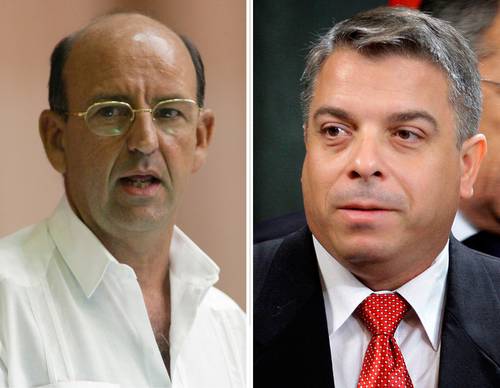
The two main figures that have gone down are Carlos Lage, ex Minister of Economy and Vicepresident, and Felipe Perez Roque, head of the Cuban Foreign policy. However, it has been much more significative and has gone more unseen the destitution of Otto Rivero, the man in charge of Cuban official propaganda. It is not strange that the opposition in Miami has made a warm welcome to all these changes.

About the other two, Roque and Lage, the first one leaves just in an -apparently- beginning of a new era in the Cuban-American relationship. Lage, on the other hand, falls from the government in a very delicate time for global economy, and especially hard for Cubans. However, it was long ago since Lage had lost all his power and influence in the Cuban government. Something really annoying for someone who even was suspected to be the sucessor of Fidel.

These news, nowadays, confirm two things. First, that Raul Castro has initiated to make his own Government, no inheritating the one that left Fidel. It’s been talking a lot these days about the substitution of “Fidel’s men” by “Raul’s men” and the military background of the people now in charge. And second, they confirm that Fidel is out of politics and is not messing with the change, leaving it on the hands of his brother.

It is, however, shocking to see how Fidel agrees with Raul’s changes. He does by saying that the ones who have left had been collaborated with the “external enemy” [USA]. There are just a few insults bigger than that in Cuba.

And even though that, Lage and Roque have admitted their mistakes and have left the Communist Party.

Change, jus a few repairs to continue or punishment for treason against the Revolution? Game is on.


Extra: New techniques of urban camouflage.


Photo: Carlos Lage and Felipe Pérez Roque (AP Photo)

Monday, February 23, 2009

USA looks under


Fidel Castro has survived another American President. And he may even manage to survive the American blockade.

Lately last year, the Cuban exile in Miami asked the already President elect to change his policy with Cuba. And to withdraw the embargo. The change in the Cuban-American relations was already in the agenda of the presidential team. Now it is as well in the agenda of the Senate, who just made public a document where criticizes that the isolationism policy with Cuba isn’t working. The document comes with the signature of Richard Lagar, the most important republican in the International Relations Committee of the Senate.

The paper comes into light just days after Castro reappeared again -and maybe he will do once more alter Hugo Chávez’s visit to the island- and it marks a crucial point for the new American policy with the Caribbean country. The report highlights, as some of the biggest problems of the blockade, that it difficults the cooperation in immigration and drugs trafficking policies.

But what it threatens more is the relations of America with his allies in Europe and Latin America, eager for more compromises with La Havana. Until now, and because of the embargo, Cuba is forced to make deals with Africa, China or Russia -with the latter and Venezuela they even have done military joint exercises last summer and the relation is growing.

With the new geopolitical map on the table, Obama’s team prefers to maintain friends back at home and enemies out of the neighborhood. So, renewing links with Cuba not only eliminates an old foe, but also attracts the prodigal sons of Europe (specially Spain, not too close to the US since 2004) And not only that, it also [tries to] isolates, a bit more, Chávez, Morales y Correa in a growing leftist Latin America.

A warning for the left in Europe who though Obama was one of their own. He won’t come to save them.

Photo: AP


.


Are you afraid? Well, this works in that way. First you do what scares you and it's later when you get the courage
Twitter Delicious Facebook Digg Stumbleupon Favorites More

 
Worldwide blog©, WGMreports© and the texts included here are copyright of Javier Garcia Marcos.
All the pictures used in this blog are property of their respective owners. Any innappropiate use of them is unintentioned. Any image or link used without permission will be removed.
Powered by Blogger