Any questions? Contact us.

Showing posts with label Africa. Show all posts

Friday, March 29, 2013

France in trouble


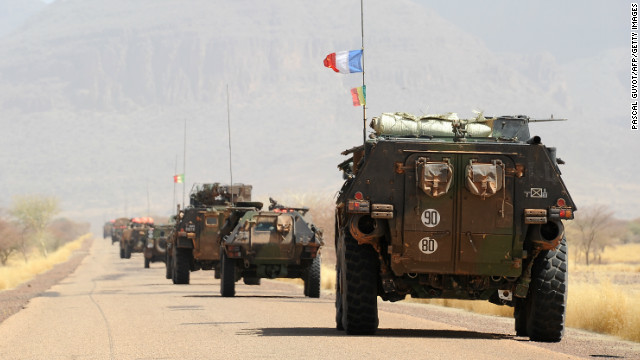
France knew it was stirring a hornets’ nest when it invaded Mali earlier this year. So did the USA and the EU. Yet they pushed through and eventually, together with several African nations’ troops, managed to achieve victory. FranƧois Hollande even went to Mali to get a photo-op on the trail of that moment.

But that photo and that victory are as close to reality as George W. Bush’s photo aboard a US carrier with the “Mission Accomplished” banner behind him. To be honest, the difference is that this time they know it. And they fear it.

Winning is easy. Keeping the spoils of war is much more difficult. Ask the Americans in Iraq. That is precisely what France is trying to avoid, getting into another Vietnam -yes, they have the same example in their history books too.

Even for the invasion, France had to stretch its forces. It needed the support of the USA and other European allies if only to fill auxiliary roles. Holding the ground, even just leading a coalition of African forces, is proving more challenging.

The land to patrol is vast -as demonstrated by the attack on the gas refinery in Algeria. The Islamists are also well armed; these are not Syrian rebels. They have powerful friends and some of them were armed by Gadaffi to fight against the same French and Americans they are fighting now just a few months ago.

Even the fighting is not over yet, as demonstrated by the recent deaths of African and French soldiers in combat missions. Not in ambushes, combat missions. And even a really weak al-Qaeda is being able to maintain a guerrilla war.

French convoy in Mali/Reuters
That is why France wants out. And they want it fast. Hollande’s Government is pushing the UN to create a rapid reaction 10,000-strong multinational force, heavy armed and under French leadership if needed. But under the UN flag and with bigger contributions from other nations.

However, those other nations are likely to be African or Asian. The US, the UK and other European countries pledged only support aid. Canada has already ruled out combat roles for its forces. A picture that sounds all too familiar.

Tuesday, February 05, 2013

Asia and Africa dwarf Europe and America in peacekeeping missions


How the US, the UK and France spend most of their forces in private wars

After several weeks of war in Mali, the United Nations has decided to discuss the possibility of sending a contingent of peacekeepers to the African country. France, which has so far led the offensive, has been willing to actively participate in a hypothetical multinational force whose mission would be to keep the peace in the region.

That is not the norm. According to the latest UN report on peacekeeping missions, none of the G8 countries are among the top contributors of personnel. They are the biggest money donors, as several of them must endow an extra amount for being on the UN Security Council -which approves and oversees all missions. But soldiers from other countries, mainly from Africa and Asia, are the ones that put their lives at risk on the ground.

The first strong economy on the list appears at number 11 and it is Brazil, which contributes nearly 2,200 soldiers. In the 15th position we find the first member of the Security Council (China, contributing 1,869 soldiers). We need to dig until the 20th position to find the first member of the G8, Italy (1,127 soldiers). Behind the Italians are France in the 26th (968 soldiers) and way behind the United Kingdom in 45th place (283 soldiers) and the U.S. in 57th place (128 soldiers).

One of the main reasons for the lack of Western troops as peacekeepers at the UN is that the organization always tries to implement local solutions to local problems. For example, most of the peacekeepers in Somalia right now are African, while in the missions from the 90’s and 2000’s in the Balkans, European troops were the core of the contingent.

Photo: AP
However Pakistan and Bangladesh, the two biggest net contributors for armed personnel, are present far away from their area of ​​influence. More precisely they are present in Africa -in the Ivory Coast, Liberia, Darfur (Sudan) and Congo- despite having a serious problem close to home with neighboring Afghanistan and tensions with India (another top contributor). Nepal, also in the top 10, has nearly a quarter of its troops in Lebanon, a country with which it shares no cultural, religious or historical ties or even a similar climate.

Meanwhile, European countries seem to have a predilection for the Middle East. 98% of Italian troops at the UN, 97% of Spain’s, 91% of France’s and 77% of Germany’s are in the UNIFIL mission in Lebanon. 97% of British blue berets are deployed in Cyprus. On the other hand, the Americans have 67% of their staff in Haiti.

These figures contrast with the number of troops that all these countries have deployed in Afghanistan. Even after sending home 33,000 soldiers in 2011, the U.S. has 68,000 troops still on Afghan soil, two thirds of the total of peacekeepers deployed by the UN worldwide.

France has deployed around 2,500 troops in Mali. Along with more than the 500 it has in Afghanistan, they make a total of three times the number of boots that the country dedicates to peacekeeping missions. Both Mali and Afghanistan are considered scenarios on the global war on terror against al-Qaeda and its affiliates.

In fact, the countries with the largest contingents in the so-called war on terror (the US, the UK, Germany, Italy, France and Spain), have a total of about 90,000 soldiers fighting in a frontline that stretches from Afghanistan to Mali and Somalia. That number does not include some personnel that do not appear on the books, as the pilots of American drones. Furthermore, none of these operations is supported by the UN, but by NATO.

The total number of UN peacekeepers is a similar figure of 94,090. However, between the six countries mentioned before (the US, the UK, Germany, Italy, France and Spain) they only add 3,400 soldiers to the UN-led operations -less than 3.5% of the total. They provide, however, 59% of the funds for peacekeeping missions, without which none of these operations would be possible. A formula -the world powers pay the bill; let others do the fighting- reminiscent of certain aspects of the theory of dependency and colonialism.

In the event that finally a UN mission to Mali is approved, and providing France finally gets a prominent place, it would be a significant change of policy for the big countries. France would become the only country that currently forms part of the G8, the UN Security Council and a significant contributor of troops to the UN.

Tuesday, January 22, 2013

Dissecting Mali


The year started strong with a French air and ground offensive in Mali. Although many cannot help but see parallelisms between what is happening in Africa and what happened in Iraq, the fact is that they are two different realities.

For starters, France had been called in by the Malian government itself and has the support of the UN and regional countries. However, it is not like they have a lack of reasons to be interested in rescuing them. From the rich uranium mines that feed the French "nuclear deterrence" to the fact that if al-Qaeda succeeds in the Sahara they would have a base of operations in Europe's backyard, just three hours away by plane. It all adds up.

To avoid greater evils, France has gone with almost everything they have in their arsenal, short of the very best. Apart from its aircraft carriers, nuclear weapons or tanks, everything else is represented in Mali. And despite that, they already got a slap in the face, with the death and display of the bodies of two French marines, a la Black Hawk Down in Somalia.

Photo: Joe Penney/Reuters
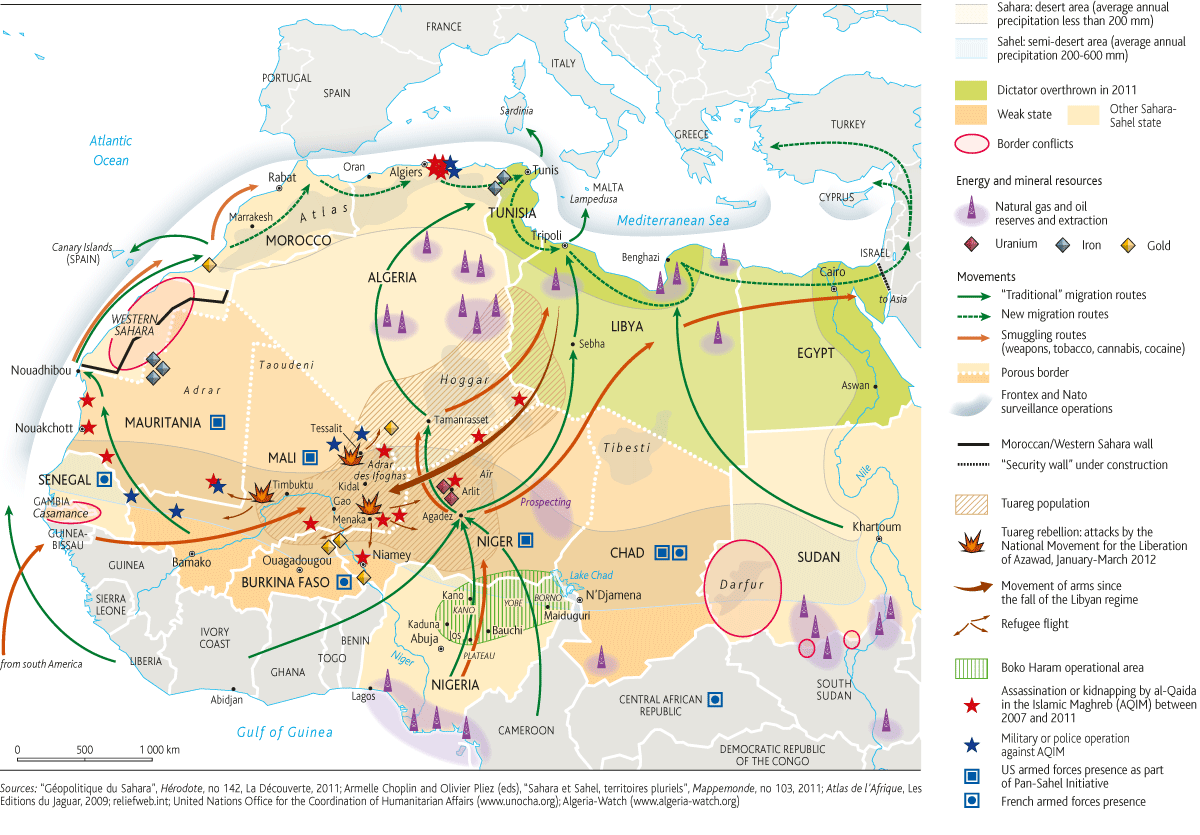
There is no wonder that Somali touches seep into Mali. Actually the West African country is just another front in a war that extends several thousand kilometers. It is a covert war, far from the newspapers’ leads, that has been fought for a decade and in which Mali becomes the third front. (See map below)

Starting in the east, the French base in Djibouti is also the home of several multinational squadrons fighting piracy off the coast of Somalia. What is less known is that it also has American drones that daily pound al-Shabab and other Islamist groups’ positions in Yemen and Somalia, even more frequently than they do it in Afghanistan and Pakistan. That is quite something.

A little further west we have a UN mission in Darfur, another one in the newly created South Sudan and one more in Chad, all of them with the presence of European or American soldiers. The later have created a vast intelligence network over the past five years, deployed in the area with their eyes put on Boko Haram.

Click to enlarge
Back in Mali, both Boko Haram al-Shabab are present, advising and assisting the rebels. Al-Qaeda in the Islamic Maghreb (AQIM) is actively coordinating with them and other Islamist groups like Ansar Dine.

Its potential danger is palpable and there are facts that confirm it, such as the recent kidnapping in Algeria of a gas plant and killing of hostages in the subsequent rescue operation. Sites part of UNESCO’s Human Historical Heritage like Timbuktu have been severely damaged by the religious extremism of these groups, in actions reminiscent of the blowing up of the giant Buddhas in Afghanistan by the Taliban.

Culture is not the only victim of these groups. After the war in Libya, the Tuareg -under the National Movement for the Liberation of Azawad (MNLA) - decided to join Ansar Dine and conquer northern Mali. After they got it, the Islamists ousted them from power and imposed Sharia law in the region.

The creation of an Islamist state in Mali is what most worries the West. After the withdraw in Iraq and Afghanistan -both left in a precarious state-, and the growing popularity of religious groups in Egypt, Libya and the Syrian revolution, the vision of a Sharia ruled belt ranging from Yemen to Mali both terrifies Washington, Paris and London and makes the wettest wildest dreams of the radical Islamists.

However, for now the U.S. and the EU have left France alone at it. The conflict can easily get stalled and nobody wants another Afghanistan now that they are getting out from there. The most they have committed is to provide transport planes, tankers and drones.

Moreover, the French have a better understanding of the area and it isn’t the first time they have gotten involved there. If someone has to go, it is just the natural thing to let the French do it.


------------------------------------------------------------------------------------------------------------
More: From the BBC, who is who in Mali.

Thursday, December 03, 2009

Outcasts' land

Three Somalian ministers died and two were severely injured today in an explosion in a hotel in Mogadishu while attending a graduation ceremony. There is no better way to illustrate the degradation of the stability of the UN backed government than that. A government that is only capable of controlling a few packs of the capital, and thanks to the blue berets from the African Union.

A few months ago, when David Axe was reporting from Somalia, he saw a huge tank in the gate of one of the Government compounds. Intrigued, Axe asked one of the commanders of the African peacekeepers, captain Paddy Ankunda, what was the T-55 for. “Not for being used”, Ankunda replied, “but for let the people know we could use them”. Only a month after that they had to use it. And again, only a month after, nine peacekeepers were killed in a double suicide attack, including a Burundian top commander.

Piracy has attracted the attention to the region but it is just a result of the outlaw chaos that reigns in the country area. It wouldn’t exist if a strong government was in place. But the UN backed cabinet is too weak to even defend themselves, as stated today’s attack, not to mention to defend their coastline. A new Somalian Navy is under formation, mirroring the structure of the “Sons of Iraq”, but so far it’s only a few hundred ex-fishermen -and ex-pirates- on the UN payroll sailing on skiffs.

But in Somalia, pirates and the government aren’t the only ones fighting. The al-Sahbab Islamist group, linked to al-Qaeda, is trying to make of Somalia -and Yemen- a regional hub for Islamists. So far, unsuccessfully. Somalia is too remote, too isolated and too xenophobic to become a haven like Afghanistan was. But thanks to the lack of government of any kind, they aren’t disturbed but for occasional skirmishes from Ethiopian troops. And that’s why they are calling for reinforcements. One of al-Qaeda’s most prominent militants, Abu Mansour al-Amriki (the American), lives already there. At least, they don’t like pirates either.

The end of the piracy in the Gulf of Aden is not only in the ocean, but in comprehensive strategies that include also action to support the UN peacekeepers in Mogadishu and the rest of Somalia. The UN has already authorized missions on Somalian soil to pursuit pirates and the government itself has called for support from others countries. Some would say they even begged for an invasion. But with things as they are right now in A'stan, it's unlikely someone else but the African Union will engage the problem. And they are already almost overran.


Did you like it? Share it Delicious

Thursday, November 05, 2009

Friendly fire 05/10/09

- Iraq combat deaths near record low.

- After a deadly month in Pakistan, Islamabad offers Taliban bounties.

- Tehran set to lose status as Iran capital.

- An excellent data collection about the piracy around the world: all the attacks by pirates in 2009 (raw data)

- Inside the Army’s Far-Out Acid Tests. Dude, that's awesome...


Did you like it? Share it Delicious

Wednesday, October 21, 2009

21st century air travel

What happens when the Kenya Airways computers go down for several consecutive hours at Entebbe airport in Uganda?

You board your flight with this rather ridiculous-looking piece of paper:


Via Somewhere in Africa.

Did you like it? Share it Delicious

Friday, September 18, 2009

Heating up the Gulf (of Aden)

At least nine peacekeepers of the African Union (AU) were killed yesterday in a double explosion in their Mogadishu’s headquarters. Among the victims is the Burundian deputy commander. Another top commander, Ugandan General Nathan Mugisha, was also lightly wounded.

The attack has been claimed by the Islamist group al-Sahbab. The rebels suffered a big hit this week after a US raid killed one of their top commanders. Immediately, the group vowed for revenge and it has come in the way of two suicide attacks. Apparently, the rebels infiltrated the compound in two stolen UN cars and detonated them once inside.

This only comes to show once again the delicate situation in Somalia. In between the multiple war clans, sub-clans and war-lords in the region, the Islamists have taken an empty slot to finishing configuring a complex board. Somalian government is incapable of controlling more than a few quarters in Mogadishu, and that thanks to the heavy presence of international forces.

In fact, the situation is so bad for the central Government that it was themselves the ones who begged asked neighbor nations to invade them. However, they are not the only ones asking for reinforcements. The Islamists have called too on a Jihad to support the Somalian brothers in their struggle.

Al-Sahbab is making of Somalia a local hub for Islamists. Somalia is too remote, too isolated and too xenophobic to become a haven like Afghanistan was. But thanks to the lack of government of any kind, they are like at home. One of al-Qaeda’s most prominent militants, Abu Mansour al-Amriki (the American), lives there and from there has released his latest hits. Including a Jihad hip-hop song.

They feel at home, and they start to rule as if they were at home. Last month, al-Shabab was successful kidnapping two French intelligence agents that were training Somali forces. One of the escaped, but the other one remains in captivity. Now, the Islamists have released their demands for the freedom of the French agent. And they include the usual al-Qaeda cocktail: stop supporting the weak UN-backed government and hail the anti-piracy patrols.

In fact, this unruled land is the same that hosts the pirates that day after day chase the ships sailing in the Gulf of Aden. Situation is getting worse, instead of improving. It’s clear that Somalia’s inexistent navy cannot face the pirates. Actually, their navy is just starting to be built up and consists basically of a bunch of ships. Sorry, skiffs.

So, with this situation in mind, Western governments are going further. The US has started taking seriously the threat on land, as the raid previously mentioned states. Others, like the Spanish government, in cooperation with the Basque government, has authorized for the first time the hiring of private contractors and the use of long range firearms aboard Spanish and Basque ships in an attempt to deter pirates of seizing them.

The French are going ahead with another front and are proposing a stupidity tax to those who had to be rescued from pirates' hands. Makes sense as so far they have been the bussiest guys around. Three rescues in two years means there are many stupids playing in cruises in the area.

But the best improvement have come from the shipping companies. New measures have reduced the number of assaults dramatically.

Not that all that it’s going to make any change. According to Andrew Scutro, Somali pirates have attacked even military ships. The translator cited by Scutro says that pirates are dumb enough to not distinguish between a military vessel and a freighter. A more frightening version would be, however, if they indeed know what they are attacking.

Ugandan AU Peacekeepers
Photo: Reuters


Did you like it? Share it Delicious

Wednesday, September 09, 2009

Brown's bad luck

Sometimes you have a bad day; you wish you hadn’t woken up at all that morning. Imagine that for a week. A month. Well, welcome to Gordon Brown’s hell.

Everything started when Abdel Basset Ali al-Megrahi, the Libyan intelligence officer convicted for the Lockerbie bombing, was released two weeks ago. It was not actually Brown’s decision. It was in fact a decision cooked and made in Scotland, Brown’s native country. But as Premier of the UK, he took the blame for it.

Megrahi was early released from his imprisonment sentence under compassionate grounds, after being diagnosed in the terminal phase of a cancer. Visible weak, the Libyan agent took a plane home on the 21st of August, just on time for the beginning of the Ramadan.

Back at home he was welcomed as a national hero. Libyan President’s son, Saif al-Islam el-Qaddafi, was even present at the airport to together with thousands of Libyans who were cheering him.

Immediately, the UK was widely criticized from the inside, the Lockerbie bombing relatives’ victims, and outside, the US. Behind the ghost of an oil deal between the Africans and the Europeans was flying the scene. The American Government stated that if that was what happened, there should be “shame on Britain” and Gordon Brown.

In the past two weeks, speculations surrounding the oil deal implicit in Lockerbie’s bomber’s release grew exponentially. A report from 2007 (when the release was first discussed) stated “British interests” were in between. Those interests have a name: British Petroleum and the rights to exploit several natural gas and oil fields in Libya.

Brown was firmly denying those involvements, however. Until this week, when his Justice Minister Jack Straw had to admit that oil may had have a big role in Megrahi’s release.

But Brown’s nightmare with Libya wasn’t still over.

On Monday, British Premier kinda backed IRA victims’ allegations to look for compensation from the Libyan Government for the arms deals between the African country and the Irish terrorists that contributed to several attacks. However, just a day after that, Brown managed to make a U turn by saying that IRA’s link to Libya wasn’t that strong. And subsequently, managed to get some angry Britons again against him.

Man, this guy really has had a bad week.


Did you like it? Share it Delicious

Tuesday, September 01, 2009

Japan and Gabon

Two distant and very different nations went to the polls this weekend: Gabon and Japan. Both of them will see the first change in Governments in more than four decades, but each one their way.

Japan democratically elected, as all the reports suggested it was going to happen, a swift in the Government. The landslide election victory won by the center-left Democratic Party of Japan is historic. After an almost solid run of 54 years in power the Liberal Democratic Party has been sent packing by a Japanese public desperate for change and fed up with its backroom power broking - it has changed prime ministers time after time without a general election.

This has an impact even greater for Japan. The mere fact of a party handling the power for half a century illustrates well this. Up until now, everything was fixed in the Asiatic Giant. Everyone had their place in the chain, everyone knew what they had to do. Like in the assembly line of a Toyota car factory.

Until the recession hit. Or more precisely, until recession blew up the entire world. Japan was already going backwards way before the West started to suffer the present meltdown. Yukio Hatoyama, the new Japanese president, mirrored Obama making a campaign for change, in a way even Obama (not even European leaders) would dare to attempt. The hope for the Japanese is that Hatoyama will be able to accomplish, at least, a few of his promises. First signs of recovery have arrived even before he takes over the office: the Yen is up and the recession is over for Japan (for now).

Gabon too had suffered a rule of more than 40 years, but in this case, somehow imposed. Omar Bongo ruled the country until he died in June. Corruption was normality among Bongo’s cabinet. After his death it was revealed he had properties and millions of wealth in banks all around the globe.

Meanwhile, his country was poor. And its economy is based dangerously only in timber and oil. But at least was stable -a big “at least” when talking about Africa. Now, after Mongo’s death and awaiting for the results of the elections held this weekend to decide his successor, the country heads into an uncertain future.

Even a Gabonese supermodel, Gloria Mika, has been advocating for a fair play in the elections before they took place. But worse could be yet to come. If results aren't the expected by the ruling majority, it might end up in a destabilized country, as often happens in Africa. The favorite is, of course, one of Bongo's sons: Ali Ben Bongo.

Both Japan and Gabon face the future with hope and, until certain point, fear of the future. But something tells me one of them will do better than the other. Anyone?


Gloria Mika
Photo: Telegraph

Did you like it? Share it Delicious

Friday, July 31, 2009

Holidays round

I’m not too eager of stopping working for long (journalism is more a lifestyle than a business, although others may have a different opinion). But sometimes it’s good to take a break. And that’s what I’m going to do from today.

Meanwhile, here are the main issues to follow during the next two weeks:

- Iraq: No more multi-national task force in Iraq. Instead, from today on, it will be just a sole force of one country, exclusively American.

- Iran: Yesterday was the 40th day anniversary of Neda Soltan’s death. Tehran saw again thousands in the streets mourning those killed in the repression by the government forces. And the Basiji, again, fought them back violently. At least 20 people died during last month post-electoral clashes.

But the scars are still fresh. An Iranian court urged the police to present charges against those detained (hundreds of them) and finally around two dozens will be prosecuted. Another prominent reformist was moved from his cell to a government house where he will be under house arrest.

It’s to expect a surge in the clashes again for the next weeks.

- Afghanistan/Pakistan: Helmand offensive still goes on. Yesterday, two British soldiers were killed and the casualty report doesn’t make anything but grow. The near Presidential election, due the 20th of August, promises a few busy weeks ahead. Karzai will win again, almost for sure, but his popularity is decreasing. The Talibans have already called for a boycott of the polls.

Meanwhile, in the southern country the drone wars go on. A recent attack killed, according to the CIA, one of Osama bin Laden’s son. The operations in Swat valley, carried on by Pakistani militaries with assistance from the Americans, have allowed thousands of refugees to go back to their homes, avoiding what could have been the worst refugee crisis since Rwanda.

But the Taliban menace persists. Pakistan signed yesterday a deal with Tajikistan to secure the region, cooperate in security matters and blahblahblah. So beautiful; the ‘Stans fighting together...

And just in case the Taliban weren’t enough trouble, a separatist group from Balochistan started to attack foreign aid workers in the area.

- China: The Uighur revolt still is on the frontpages. China revealed last week official numbers for killed and detainees. Detentions that today are still going on.

Also abroad. While the Chinese government was exchanging opinions with Obama and messages with Taiwan -both signs of aperture of the regime-, it was angrily criticizing the words of the Uighur exile leader and the projection of an Uighur documentary in a movie festival in Australia.

Australia, by the way, is engaged in another nasty diplomatic clash with China regarding a few wallabie employees of Rio Tinto detained in a spy case. The problem for those employees is that they revealed data from Chinese companies to their partners abroad. Data that is open source in China. This puts over the edge hundreds of consultants. What to do now? Where is the limit about what to publish and what not?

And if they survive that, still can be themselves into a collective illnes inside their company.

- Horn of Africa: With the comeback of somalian pirates, the region should have enough. There is even a new videogame about it. But this is Africa. There is never enough trouble.

Knowing that -or maybe collaborating to that- the USA has intensified his pressure over Eritrea and his support for the Islamist groups operating in Somalia. Yet a hypothetic deal sounds like a far dream.

Meanwhile, America plays a wild card strongening his presence in the area through the semi-autonomus region of South Sudan. Members of the newly created South Sudanese Air Force -no planes yet- were training this week in the USA. South Sudan is undergoing through a rearming process as the recent images of Faina’s tanks found in the region prove it.

- Rest of Africa: In Nigeria, clashes between Islamist militias and government forces in the north of the country left 150 deaths. The ambushes are still taken place.

In South Africa, newly elected President Zuma has abruptly ended his honeymoon with his voters. A massive strike shook the country during this week.

Meanwhile, a new campaign has been launched by a Namibian NGO. “Lords of bling” tries to remind the African leaders their promise to spend at least a 15% of the money in healthcare, a measure long forgotten by most of the African Union signers of it. The signer Akon has designed this song to remind that fact to the African presidents.


- Israel/Palestine: The settlements center the debate. International pressure grows as the US envoy to the region increases the talks too. Netanyahu agreed yesterday to destroy 900 houses in an East Jerusalem colony.

Inside Israel sensibilities around this are also changing. Some analysts consider Israel’s image abroad is being heavily damaged by the settlements (smart guy). Some settlers even are speaking out and admit they would leave in exchange for the money spent in their homes and similar conditions somewhere else inside Israel. Some others, not so.

What doesn’t change is Netanyahu’s hawkish government. The last idea is ask demand the Netherlands and the UK to stop giving funds to the NGO Breaking the Silence, who has done some research of alleged Human Rights violations in Gaza by the IDF. Next will be to point European governments how they should spend their money.

And meanwhile the Netanyahu’s government asks Holland and the UK to stop funding pro-Human Rights NGOs, their allies from the far right ask the IDF soldiers to cover up for the abuses committed in the West Bank.

On the northside, the IDF has been put on alert after Lebanon forces were movilized too. However, IsraelĆ­ officials consider unlikely a reedition of 2006 Hezbollah-Israel war, specially now with so many international forces in the zone.

On the other hand, in Gaza, Hamas starts to apply their particular vision of government. Up until now, Palestinian women could consider themselves lucky. I was actually talking about this recently with a Palestinian friend. While Saudi Arabian women cannot drive a car or meet with strangers, Palestinian women can do that and even wear trousers, the head uncovered or -if they want, and also the men- buy alcohol.

All that could be about to change. A judge has ordered in Gaza to all the female lawyers to wear a head scarf. It is just an example of many more that are showing Hamas’ Islamist hand in Gaza. Like restrictions with alcohol or the new religious police. Here an Al Jazeera video on it:


- Latinamerica: Honduras’ political turmoil doesn’t look well. But at least negotiations are moving up. Slower than a sloth, but moving up. Zelaya is in Nicaragua’s border from where he visits periodically his supporters. Meanwhile the interim government is more and more in lack of support. Abroad, the USA revoked several diplomatic visas. Internally, the Army admitted the predisposition to accept a unity government with Zelaya in front. Last word is Micheletti’s.

Further to the south, Colombia and Venezuela are again fighting. This time, a few Swedish grenade launchers were the detonant of the diplomatic turmoil. The weapons, sold by Sweden to Venezuela, ended up being discovered in a FARC’s camp. After that, the usual crossfire between governments and Hugo Chavez’s usual recall of ambassadors.


And basically that’s all. Add some narco fights in Mexico and a political fight in Burma (Google this, I’m tired of linking news today) and you have enough to be busy for these two weeks I’ll be out.

So, until then... Be good, have fun, and don’t do anything I wouldn’t.


Did you like it? Share it Delicious

Tuesday, July 28, 2009

Pirates are businessmen

An excellent interview from Scott Carney appeared in Wired magazine's Danger Room throws some light on the piracy business. Just a couple of examples of the great work done by Scott:

"The financiers are the most important since they organize and plan the big shot operations and are able to pay running cost[s]. Financiers always need to forge deals with traders, land cruiser owners, translators, business people to keep the supplies flowing during operations and manage the logistics. There is a long supply chain involved in every hijacking".


"Hostages — especially Westerners — are our only assets, so we try our best to avoid killing them. It only comes to that if they refuse to contact the ship’s owners or agencies. Or if they attack us and we need to defend ourselves".


"Every government in the world is off our coasts. What is left for us? Nine years ago everyone in this town was stable and earn[ed] enough income from fishing. Now there is nothing. We have no way to make a living. We had to defend ourselves. We became watchmen of our coasts and took up our duty to protect the country. Don’t call us pirates. We are protectors".


The complete interview, here.


Did you like it? Share it Delicious

Wednesday, July 15, 2009

Somalia’s return

During the past few months the international fleet that protects -just a way of speaking- Somalia’s coasts, have been really happy and proud of their job. “Assaults have been reduced”, they said. Even they made it to zero assaults for a month. But it was all an illusion. When the cash starts to be needed again and, most important, the monsoon disappears, pirates are back in business.

Nor the incident with Capt. Phillips, nor a greater military deployment were a match for the skiffs. Only bad weather could stop them. But with the clouds out of the horizon, pirates are free to sail again.

Back in land, the situation isn’t better either. Yesterday we knew that two French agents had been kidnapped by Islamic militias in the Sahafi Hotel. At first it was though they were journalists, but later it was told they are intelligence analysts training their Somali counterparts.

That Somali Army, however, is something more like a project than a real deal. After every coup, war, skirmish or change of power in Mogadishu, that army had to be remade. The only permanent competent force in Somalia assisting the Government, are the African Union (AU) peacekeepers. They control the Presidential Palace, a few Government buildings and what keeps the keepers alive: the port and airport, where they got the international aid and weapons.

In the clan war -or even sub-clan war sometimes- of Somalia, the AU soldiers have developed a slightly good job. Their biggest foe is the Al Shabab Islamic militias. The peacekeeper forces have, however, the fire power on their side. Compared to the American army they are very poor equipped but against the Al Shabab, they are freakin’ Stormtroopers.

One of the most important pieces of their arsenal are two old T-55 Soviet tanks. According to David Axe, captain Paddy Ankunda of the AU forces, told him two years ago that even if they never used them, having them there was always welcomed. Not for being used, but for let the people know they could use them.

Until now. This weekend, the peacekeepers were surrounded and they needed the tanks. The inclusion of the tanks itself is a great deal and a symptom of the escalation in the war in Somalia. In the end, it is a no-man’s land with hundreds of weapons running free around and nobody knows what will be the next movement on any side. Somalia is a land of guns, just an augmented mirror of what happens in the rest of Sub-Saharan Africa.

In fact, recently were discovered satellite images suggesting that Faina freighter’s tanks, which was seized by Somali pirates half a year ago (do you remember it?) and later released after a ransom payment, ended up in South Sudan Army. The same one who is in the edge of a war with Chad over Darfur, a region full of refugees (do you remember it?). And part of the country whose head of state is Omar Bashir, wanted for The Hague International Court (do you remember it?) under the accusation of sponsoring Islamic militias among other charges. The same Islamic militias Ethiopia and Somalian governments try to fight back at home. And the same Governments unable to put an end to piracy on their costs.

Everything is connected in this annoying Africa.


Photo: AP

Did you like it? Share it Delicious

Monday, July 06, 2009

DejavĆŗ

Nobody talks about it now, but Darfur is a hot spot. Really hot.

After months -we could even say years- of clashes between Chad and Sudan, the Darfur area is full of refugees living in camps. They are under the protection of the UN and they are a -relative- oasis in the middle of a desert of battles. Everyone fights everyone else here. Irregular militias against the governmental forces, between themselves and Chad and Sudan armies to each other.

The main contingent in the area correspond to peacekeepers from the African Union, who yesterday denied again the warrant over Omar Bashir, the Sudanese president and one of the key actors in this mess.

Yesterday too, that contingent got a hard knock out after it was known that their commander in chief, the Nigerian General Martin Luther Agwai, had been “invited” to resign. The reason was lying at home, where apparently his wife was involved in a corruption case.

David Axe asks himself up until which point it is a logical decision to make a good General, who was making a great job, to step down due to a problem of corruption, even when is not directly linked to him and we are talking about Africa:

Does possible corruption (emphasis on “possible”), on the home-front, diminish Agwai’s value as a commander? Consider how corrupt recently-deceased Gabonese president Omar Bongo was — and the many decades of peace and relative prosperity he brought to his country.

Corruption is as African as sunshine. How do you balance the need for a less corrupt future society, with the pressing demands of today’s missions, which beg for today’s corrupt leaders?


Because the AU forces in the area are not in a good position to prescind of one of their best assets. Outnumbered and under equipped, the troops limit themselves to self protection duties and to protect the refugee camps the best they can. But that’s a delicate balance. If things go worse, they won’t be able to maintain the position anymore.

They struggle right now to control a region the size of Texas, when only skirmishes are taking place. If a full scale war starts, a possibility closer every day, the only solution will be a withdraw.

Behind we left a lot of proposals like the creation of a no-fly zone over Sudan, like the one in Iraq after the Gulf war. Or the supports in Chad of several European nations, with troops on the ground from even those you don’t see easily abroad, like Ireland. Behind is too the warrant over Bashir, which won’t be obey by any Muslim or African country.

There are only left the refugee camps, thousands of people fled from their homes, an open war menace more clear every day and a surrounded peacekeeping force unable to even guarantee their own security.

I think I just had a deja-vĆŗ. If that rings a bell in anyone, raise your hands.

Here is a clue: Rwanda.


Photo: AP


Did you like it? Share it Delicious

Monday, June 08, 2009

Friendly fire 08/06/09

- Not only Europe goes to the polls. In Lebanon, a pro Western coalition wins the majority of the votes. Hezbollah however, still controls the streets.

- Bongo, Gabon’s president, dies in a clinic in Spain. After Castro resignation, he became the head of a state (not counting monarchs) that had been longer on power. Or maybe he still is?

- David Axe unveils why is not wise to guess about a war with China.

- Maybe I have to eat my words and McChrystal indeed means a real change for air support in Afghanistan.

- More than half of Kazakhstan uranium reserves (it’s the third biggest producer of uranium after Canada and Australia) have been stolen.


.

Thursday, May 28, 2009

Yes we can (soccer way)

They said it was going to be a year of transition. A new manager, a newbie. A demoralized team. A strong and fit archenemy. A huge challenge. And they lost their first game of the season against one of the weakest teams of La Liga. But in the end, today Barcelona is the present king of world soccer.

Just a few times in a lifetime is possible to see so magical moments like the ones lived in Rome. With an excellent game -although not so excellent as everybody though it will be-, FC Barcelona won by two-nil the former European Champions, Manchester United. The difference in the scoreboard reflects the difference of quality on the field.

Before the game, ManU was the favorite. Partly because of the own Barca, with several injured or suspended, specially in the back and forward. Partly because of the English media, that made CR7 Caesar even before arriving to Rome.

But in the end, the modern soccer coliseum was the tomb for ManU and the esctasis for a social mass, the Barcelona supporters, that now can walk proud along the biggest teams in History.

Last night's victory makes Barcelona the first Spanish team to get the triple crown: Spanish League, King's Cup and Champions League, the three major tournaments a SPanish team can be involved in. They are also just the fifth team in all History that achieves that. The others are Celtic, Ajax, ManU and PSV. But of course, it's not the same achieven that in Scotland or Netherlands that doing it in Spain or England.

Last night, the soccer won. It won a style, a way of living this sport, an elegant way of playing it. Seven player of the starting lineup of the Barcelona were from the house. Some of them (like Messi or Pique) are now the reference in their positions in the field.

But also individually, there was some kind of justice. Silvinho and Henry saw the price to a great career with the only title they were lackying. Guardiola, on the other hand, got the privilege of getting into a prestigious club: the one with the players that have won the Champions League both as players and managers. The other two are Cruyff and Rijkaard. Worths saying that all of the three guys won the cup at least once with Barcelona.

But there was some space too for the other side of the coin. CR7 has shown the world before he's just a kid, and last night he did it again. And although in Rome there wasn't any incidents, in Nigeria a ManU supporter killed 4 Barcelona supporters that were celebrating the thriumph.


Photo: EFE/Ettore Ferrari. More photos here.

Monday, April 20, 2009

Friendly fire 20/04/09

- No-one is surprised by Human Rights Watch report's appreciation: Hamas too used Gaza war to apply justice. Their way.

- Beware, Scottish criminals. Here comes the Jedi (Police) Force.

- The outlaw country no-man’s land of Somalia adopts the Sharia. Well, at least it’s something... On the other hand, the only theological country in the world (the Vatican) condemns Belgium condemn of the Pope words in Africa about condoms. But everybody is cool if they are the ones trying to affect other country’s policy.

- Being a journalist today sucks. Being a journalist in Israel sucks even more. Being a journalist in Israel being paid by a Spanish news agency; better find something else. Being an Indian journalist having to write about the inferior masculinity of the Indians; that’s better if you kill yourself.

- The video (click here) that made me stop hating Lindsay Lohan. At least the girl has humor sense.


.

Saturday, April 18, 2009

Aye captain, no end on sight!


Asymmetrical warfare is the new black in international armed conflicts. Obviously, the seas weren’t going to be indifferent to this fashion.

The problem of the Somali pirates is starting to become too big to be handled by traditional Navies. And its aftermath will be sensitive for the Western countries. Already in an economic downturn, it specially affects the Europeans, that can see the consumer goods’ prices climbing too much. For Americans and Russians the problem is not so bad: neither their commerce is directly affected nor their ships use those routes.

That’s why only last week we had the first seizure on an American freighter: the odds are against the European and Asian ships just for a matter of numbers; they are many more. For the rest, the area where pirates operate is key for the maritime commerce lines between Asia and Europe. The Gulf of Aden sees every year more than 20,000 ships going through it. Add to those number the intense fishing business (mostly Europeans, again) and make the maths of people sailing around.

In fact, this latter issue was the one that triggered the piracy in the region. Just 20 years ago, the now sea bandits were just fishermen. The big European ships, using big trawling nets, decimated the fish on the waters. The local industry couldn’t compete with the big boats of the foreigners. So they organize themselves against them to render a “fine” for fishing around.

What started as a revolutionary fee imposed to foreign fishermen operating in the area turned into something bigger and more organized. Being a pirate today is highly profitable, compared to the risks. And what’s more ironical, piracy is finally achieving its starting goal. According to the magazine Warship International Fleet Review, the tuna hauls of foreign fishing companies in the region has been cut in half.

All this could have been avoided with the presence of a strong central government in Somalia. But for years, there hasn’t been anything at all. The fall of the State in 1991 and the forwarding waves of armed conflicts (USA, Al Qaeda, Ethiopia) left a broad zone of the Horn of Africa alone with a huge arsenal at their own. Somalia is not a failed state, because there isn’t even a state. The official Government controls only a few blocks of the capital, Mogadishu. The rest, is just a no man’s land between their neighbors and the sea.


There are no easy solutions to the problem. Noah Sachtman, from Danger Room, proposes some. Some, like sending in the Navy (in fact, they are already there) and kill the pirates who seize freighters (like in captain Phillips’ incident), seem to be in line with the vision from a 72% of Americans, who want a tougher approach.

But it doesn’t look easy to coordinate a dozen navies and twice that number of warships. And in fact, it doesn’t seem to be having much effect on the pirates either. It is true that during the first months of 2009 the Joint Task Force had a relative success. The attacks were cut and all appeared to be a bad nightmare from the past. But it was just a mere illusion. As soon as the spring sun started to shine and good weather come back, pirates started to sail again, stronger than before.

And about the possibility of killing the pirates, the possible revenges against other ships make that option very unattractive for the crews. And the non-lethal weapons, only have worked so far once. Sailors, in general, prefer their shipowners to throw ransoms rather than bullets. And that’s why stopping the payments won’t work either. There will be always someone who will pay and will destabilize the general strategy.

Other options suggested by Noah include make convoys or give guns to the crews, but neither of them are welcomed by the shipowners. Convoys worked during WWI, but the delays forming them would result in millionaire losses for the companies. On the other hand, the option of arming the crews, apart from sounding impossible to some kind of ships (no firearms at all onboard tankers, for example) is hardly against the will of the sailors. They are the first one that doesn’t want any guns onboard.

So, if we don’t send in the military (that also, is not prepared for this kind of warfare) and don’t arm the crews, there is only one option: mercenaries to protect the ships. In this way goes Ron Paul’s proposal. The former Republican candidate to the presidency suggests giving “letters of marquee” to modern privateers.

The professionals like Blackwater Xe, already are on the market, since last year. Shipowners, though, are not so happy with the idea. They cannot afford the bills that the USA pays in Afghanistan and Iraq.

The US Navy Admirals are considering another option that lies in between the contractors and the armies. This would be to pay pirates to attack their brothers. This is, copy the tactic used in Mesopotamia with the “Sons of Iraq” to apply it in open seas.


But probably, the only good, solid and stable exit to the problem would be to implement a strong Government in Somalia and attack the pirates on shore. Barbery wars were only solved when pirates’ refuge in Algiers was taken by the French. And the UN has already authorized raids in Somalia’s soil to prosecute the sea bandits.

The problem is that not many countries are willing to take part in an operation in the Horn of Africa with boots on the ground. Ethiopia did it because it was in their own good, to avoid an Islamist nightmare in their backyard. Maybe Kenya could be convinced to intervene for the same reason, but they are already with too many problems at home. For the rest of the countries, that’s unlikely to happen.

The United States are already involved in three asymmetrical wars in Iraq, Pakistan and Afghanistan. Getting into more trouble may be considered, but after “Black Hawk Down” it is unlikely to see American troops getting alone in a serious operation on Somali soil. Only, maybe, France could get along the US in this adventure. The French have launched nine operations against the pirates, one of them, a helicopter-borne commandos infiltration on shore.

For the rest, nothing is expected. The EU created a task force and was the first one in the area, but lacks of the logistics to get involved in an asymmetrical war in Africa being already engaged in Iraq and with the Talibans in Afghanistan, what is their priority right now. China, India, Japan and other Asian countries have done more than enough. At least, to the light of their public opinions, that is what counts. Russia? Don’t expect the Russians in this game.

However, Secretary of Defense Robert Gates is willing to create something like a state in Somalia. This position collides with UN decision last December to pull out of the country and end its mission there. Obama bets too for tough hand against the pirates. And Secretary of State Hillary Clinton has also elaborated a few proposals in this way.

Clinton comes with the already said ideas of increasing the coordination between the navies, modernize freighters’ passive defensive systems, make some government building and, the most original idea, freeze the assets of the pirates. A great idea if it wasn’t because it is really hard to bring into a safe port.

First, there is no State in Somalia who controls the banks. There aren’t even banks. And then, there is the issue of the money. Pirates doesn’t use online accounts transfers to get the ransoms. They want cash, preferably in sport bags handled over by hand or launched into an area in land or the sea from helicopters. And after they got the money, they don’t save it into Swiss accounts like AIG executives.


For now, some as Abu Muqawama see signs in Obama’s policy that show they may be preparing an intervention soon. But until then, the Horn of Africa will be the most dangerous place on Earth.

And it's getting worse.

Somalia’s Prime Minister, Omar Abdirashid Ali Sharmake, says that with the money from the ransoms -a huge amount in the last months- pirates are now able to buy more weapons, more equipment and more contacts.

Until now, they always attacked small preys near the coastline armed with cheap weapons like RPGs and old Kalashnikovs. And more important, they lacked from logistic and information.

But as David Axe suggests, now, thanks to their GPS devices and a wide net of spies -made up of money- that includes port authorities and custom officers form Port Said to Mombasa and Dubai, pirates know exactly which ships are where, when, what are carrying and if they are able to attack them or not. And the beginning of seizures after the dark increases the worries about the pirates acquiring night vision tech.

That’s why Sharmake asks for guns to fight them back. But introduce more weapons in a country already riddled with them seems very risky. Last time that happened, thousands of Somali soldiers deserted with their uniforms and their guns. And even if they don’t do so this time, the Somali army has only less than 5,000 really loyal boots.

Of course, in the end, the Somalis will have to become a solid country with a strong state, but as for today, they aren’t still up for the job. And getting more weapons without control won’t help.

Meanwhile, as the Economist states, the best ally for the freighters in the Indic will be bad weather. The monsoon starts at the end of May and lasts until August. Let’s hope this year will be a bit longer.


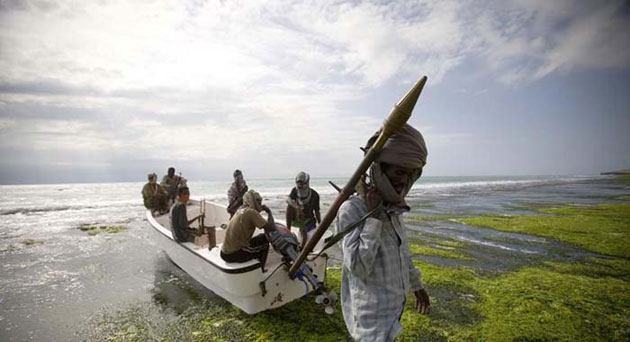
Photos: EPA / Veronique de Viguerie / Reuters / Jehad Nga

Thursday, April 16, 2009

World leadership without a leader

Kofi Annan. Hands up who remember him. Of course you do. Just having watched TV for a while sometime in the past ten years you have known a thing or two related to him. He made of his time in the UN General Secretary office a valuable period. Maybe he wasn’t as successful as he should have been, but it was more because of having in front a super-villain like Bush Jr. rather than for lack of effort. Somewhat like why Larry Bird wasn’t as bright as he should have been: because he had in front of him two people like Magic Johnson and Michael Jordan.

But, anyone knows the current UN General Secretary?

Ban Ki-Moon -that’s his name- is a complete unknown person for most of the general public. In fact, in an occasion talking with Korean friends, they were surprised that I actually knew of the existence of him. Well, maybe that’s not so important. In the end, many of the common people like you or me never will give a shit of what is done in NY’s UN HQ. But what is more worrying is that not even in the diplomatic circle is he well known.

Just as a starter: his internal circle is really close to outsiders. The decision group surrounding him is made up of close collaborators of Ki-Moon. Like Kim Won-soo, an old friend from his time as Foreign Minister in South Korea and the visible head of the corps guards constantly around him. Going down the organization, it doesn’t get better. The General Secretary tries to manage the UN as if it was his old Korean portfolio (homogen and uniform) when it is something completely different (heterogen and complex).

From the old employees of the floor 38 of the UN building in NY (the floor of the General Secretary office), just a few survived after Annan left. As an African diplomat said to John Carlin in this article their substitutes lack, generally, of the experience and abilities of those under Annan management.

To make things worse, he has betted since the beginning for a discrete diplomacy. Indeed. Ban Ki-Moon’s inactivity has been a constant since his first day in office. He then started his first test by standing in a passive attitude against the sentence against Saddam Hussein in Iraq, just the opposite to the general attitude from the UN office against death penalty.

Then, the inactivity or late responses have been going on crisis after crisis. In Sudan (for now, his only victory, and it was just temporary and partial) he convinced al-Bashir to let international NGOs operate in Darfur. But a few months after, he didn’t have any problem to meet him FACE to FACE in the Arab summit in Doha, even Bashir was under an arrest warrant from the ICC

In the African Great Lakes, in Georgia and in Gaza, Ban Ki-Moon arrived late and show. Very late, in fact, In the case of Gaza, he only started to speak when the death toll was already on 600, even some UN offices had been already attacked before and will be again in the days after.

Now, we have to add to the list the Western Sahara. According to a report from his office, and against the opinion of the UN’s envoy to the area, Chris Ross, and some NGOs, Ban Ki-Moon considers that the MINURSO mission should finish. Well, in fact this shouldn’t be so shocking. He did the same in Somalia last December, leaving them alone.

But if DPRK launches a missile, then three days are enough to make a condemn resolution.

Of course, China, Russia and the USA are really happy with him, unlike they were with Kofi Annan. In the end, Ban Ki-Moon is a good boy and doesn’t give them too much trouble.


Photo: AP

Monday, April 13, 2009

US Navy 1 - Pirates 0 (Updated)

Finally. Captain Richard Phillips, kidnapped by Somali pirates since Wednesday in the Indic Ocean waters, was freed yesterday by the US Navy SEALS.

Details from the operation are coming out quietly. We know for sure that Obama approved at least twice similar operations to liberate Phillips –for those angry Republicans accusing him of not doing anything. In fact, last Friday the Navy tried to reach the lifeboat of the pirates, but they were repeled with fire.

At the end, Navy snipers took their chance when one of the pirates was onboard the USS Bainbridge negotiating the fate of Captain Phillips. They shot down the other three in an intense but short sniper fire. 3 bullets, 3 dead pirates. The remaining pirate waits in the American ship to know what Hill be his future, but he faces a life in prison in the US. Captain Phillips is free, alive and healthy.

But 24 hours alter the rescue operation we still don’t know for sure how it was. Apparently it all started when Phillips was pointed by one of the pirates with his AK-47 and the USS Bainbridge captain ordered to neutralize them. But it is unclear if Phillips jumped into the water when the shoot-out started or if it was before -and then the SEAL’s snipers started to make their job.

Anyway, the point is that at least Captain Phillips is alive. And now he become a new nacional hero (sorry Sully, your time is over)

It is not the first time pirates are taken down by firearms, but it is the first time the Americans are involved. This incident will mark an inflexion point and probably, from now on, we will be immersed in new maritime guerrilla warfare. For now on, pirates have promised retaliation.


Photo: AP Photo/US Navy

Update: Well, they promised retaliation... Indeed. Just this morning, an American Congressman took off in Mogadishu under mortar fire.

Killing flies with cannonballs

Back in last year’s November, when I started writing this blog, I did so talking about pirates. Then, the modern buccaneers were right on the top of the wave. The kidnapping of a supertanker and a freighter loaded of tanks woke up Governments all around the globe.

Immediately, some countries sent their ships to the area. Not so China and the US, who joined the force months later. Since then, it’s become the biggest and most heterogen combat fleet since World War II, according to the CNN. And although at the beginning it seemed to have some effect on the attacks, truth is that pirates are back in business. They were just enjoying the money from their last prey.

Only in the last month there have been more than 30 seizures -half of them in the last week. “Numancia” Spanish frigate could abort the seizure of a Panamanian cargo on Tuesday. The French weren’t so successful in their rescue attempt. It was the third operation that the French Special Forces were delivering against the pirates, but this one didn’t come out well.

All the others were when the ransom had been already paid and the hostages freed. They ended up with the pirates captured or dead. It was like a warning to pirates, like saying that piracy doesn’t worth. This time the tactic was different. They attempted to rescue the hostages without paying any ransom and the result was a dead hostage.

But what has attracted the attention of the media has been the seizure of a Danish freighter with American flag and crew onboard, the MV Maersk Alabama. The pirates assaulted the cargo ship but the crew was able to recapture it. Pirates then escaped in a lifeboat with the captain as a hostage. He is still held captive.

The captain couldn’t do more than what he did, exchanging himself as hostage for his crew. It was worthless the attempt to escape swimming. The USS Bainbridge who is following the lifeboat of the pirates, couldn’t do anything. It didn’t even have a helicopter onboard -epic fail- and for now, the ship only can monitor the pirates with drones. Another amphibious ship, this one with choppers and Special Ops teams onboard, is heading to the area. The FBI is also negotiating with the pirates.

Meanwhile a small fleet of other seized ships with pirates onboard are also trying to locate their commarades, defying the omnipotent US Navy. The intention is to create a circle surrounding the lifeboat and carry the captain to land where negotiations can be delivered with Washington, even for the future, having the captain as their safe.

This incident has shown even more the need for a new small ship to face this threat. The same kind that Gates pushed in his budget proposal. The big destructors, frigates and carriers are unable to make any good against the rapid squiffs and irregular pirate tactics. But a small, agile ship, able to navigate near the coast and with airborne units -just like the Littoral Combat Ship- is the perfect match for them. And that’s precisely Obama’s and Gates’ phylosophy. Anything else is like try to kill flies with cannonballs.

It also has shown that the fact of having a naval deterrent in the area is worthless. You can deter someone who has something to lose, not someone who doesn’t have anything. Problem is not piracy, that’s the consequence of the poverty and lack of government in Somalia. Before being pirates they were just fishers, why then live in danger?

The problem is in Somalia, on shore, not in the water. America is a young country and may not know a lot about the lessons from History. But just 200 years ago, when the US were a growing nation, they joined their first international military mission abroad to combat the piracy in Barbary. They should remember that the problem wasn't solved until the French invaded Algiers.


Photo. Reuters


Are you afraid? Well, this works in that way. First you do what scares you and it's later when you get the courage
Twitter Delicious Facebook Digg Stumbleupon Favorites More

 
Worldwide blog©, WGMreports© and the texts included here are copyright of Javier Garcia Marcos.
All the pictures used in this blog are property of their respective owners. Any innappropiate use of them is unintentioned. Any image or link used without permission will be removed.
Powered by Blogger