Any questions? Contact us.

Wednesday, August 27, 2014

I am a journalist. It’s what I do, it’s what I am. That’s about to change.

I am a journalist. It’s what I do, it’s what I am. Probably the most defining thing of who you are is what you do. In my case, that has been linked to several things in the past decade, all converging into journalism. That’s about to change.

It’s difficult to change course. Yet sometimes you feel you have reached a wall and you need to go the other way. That’s not only how I feel now but also how I’ve felt for the last couple of years. It is the reason why I am embarking into this new career as a paramedic.

It’s really recent in my memory but this August marks the 10th anniversary of the date I consider my baptism into journalism. Back in 2004, ten years ago, still in my second year in college, I was fed up with no getting responses from anyone to work, not even as an intern –apparently it was a requisite to be in the final two years of your studies. So I said “fuck this” and did the same that many journalists before me had done: pack my bags, grab my camera and head into somewhere newsworthy: Palestine.

From that trip, I brought back my first published story, lots of photos, a broken camera (I blame Ben Gurion guards) and many friends, stories and contacts. Later would come Bosnia, Iraq, Syria or Egypt. In between, in order to pay the bills I had to work on anything I could. I tried to keep it related to communications, so I wouldn’t miss the train: business intelligence, corporate communications, analyst, blogger, social media consultancy gigs…

But the truth is that the freelance lifestyle never took off. I blame myself. Maybe it’s that I’m not good enough. Or it could be something else. I am a disaster as a commercial agent, have zero selling skills and although I enjoy getting into, and telling the story, the whole process of selling it was extremely tiring. I’m useless at it. In a market dominated by freelancers, that’s bad.

It didn’t help being in an industry that pays barely livable fares per job and where some people even expect you to work for nothing. Exposure doesn’t pay the bills. Without a decent pay, journalism mutates from the most beautiful job in the world to the most beautiful hobby in the world.

Neither did help that I probably never recovered from the psychological hit that was having to witness as a mere TV spectator, from New Zealand, the Arab Spring. The Middle East had been my specialty since even before I started and in their most defining moment I was trapped in the other side of the world. It was a huge blow, a hard pill to swallow. Sat in my apartment of Auckland, I think, I missed the train completely.

Despite it, I didn’t despair. I was decided to find my place. I tried then London, which paid decent wages and there was work. But it didn’t work. Somehow, something was missing. The photocalls with famous people didn’t fulfill me.

I got into journalism with the idea of contributing to create a better world, like many others. But unlike them, I have kept that goal since then. The reality, however, is that I can’t do much. For all the stories of bad border crossings that I have, I also have stories of people thanking me for being there, thinking that my camera or my pen will awake minds in Brussels or Washington to stop a genocide or help them combat an invisible foe.

That’s bullshit. We really can’t do shit.

I might get an article published on the tragedy of the Kurds, or a picture of a kid in the rubble in Gaza on the front page, but even if it’s seen or read or heard it’ll be forgotten under the latest Kardashian appearance or Ronaldo’s volley goal in the last game. You and everyone else will read it and go on with your life. And that’s ok. I get it. Only that those in the news departments shouldn’t think like that, but they do.

And then it’s when people I followed or I had met started to fall. It wasn’t the first time that it had happened. But somehow this time, and thanks to the effect of social media, it punched closer to me. It was different than reading of the deaths of the reporters of the past. These guys had given me tips, we had shared a beer or we had run together for cover.

Jim’s death last week is just the last straw of two years of being in a really uncomfortable place, wishing for the happy ending of a kidnap of a colleague or lamenting the death of others. Could have it been me instead of Ricard or Jim or Azem had I stayed in the course I was on until 2011? More than 270 journalists have died in the last two years alone.

All that for nothing. People in general don’t care about such boring things as politics and the deaths of others far away. Although many people approached me after Jim’s death to express their condolences, there’s one friend that after asking me “Who is that Jim?” and me explaining him everything, he just said: “Oh, ok; weird stuff”. Even worse, after Jim’s death I have had to see not only some media trying to make it into a circus but also conspiracy theorists insulting the memory of someone they never met for the sake of their stupid cause.

All that made me rethink my priorities. A lot has changed since I started. I have changed too. When I walked between the rubble in Nablus and met Yasser Arafat in Ramallah back in 2004, I was enjoying the single life. Now I have a stable relationship with a wonderful woman with whom I talk constantly about our future together. I think with two people (or more) in mind now, not just me. Considering that, is it fair for me to risk my life for a misery of a salary in a job that has almost no real repercussions empowering people?

I probably could keep doing it if it paid well. Or if it wasn’t so risky. Or if it was worth it and really helped people. But journalism today doesn’t click any of those boxes. Even worse, I think journalism is dying as we know it. A few selected ones will prevail while most will be forced to find greener pastures in other jobs. And don’t get me wrong, there’s a plethora of excellent journos that will survive; but I’m not in that group. Still, I could keep trying if my personal circumstances were different. But my priorities have shifted now.

This is why I’m starting a new career and trying to become a paramedic. It still has the stress, long hours and risk of journalism, even some of the ingratitude and impotence against certain situations. But it’s worthy, you help people and you have an immediate effect on their life. Especially that fact, that you do change the life of someone, you can literally save them. It also lets me go back to my girlfriend and a hypothetical future family every day after the shift. And it has a better future while being decently paid.

Yet I know I’ll never be able to leave journalism completely behind. It’s just a big part of me. I’ll come back to this blog and the Facebook page from time to time. This is a bittersweet failure, one that has made me the man I am today and that has given me so much, but at the same time one that has also led me to this situation. I regard in high esteem and appreciation the colleagues I’ve met that keep doing a great job against all odds and I hope they continue to do the job they are doing. They’ll find a way to make it matter, I am sure of that.

I do know that this new life as a paramedic will probably be a better fit for me in my present and future situation. To the despair of my girlfriend, I don’t rule out going back into a conflict zone or disaster area when I graduate, but this time in a humanitarian role, closer to the stories of those I listened to for ten years and, this time yes, being able of helping them in a direct way.


It’s been a great ride. But it’s time to change.

Monday, August 19, 2013

The straw that breaks the camel’s back

Hosni Mubarak's lawyer said today that his client could be free in less than 48 hours. It would be the last straw, the final step for a planned return to the old regime in Egypt, one that the coup that was not a coup started.

Since the Egyptians ousted the Egyptian president, that revolution has only gotten more and more diluted. As it has happened in other places, as in Syria, groups as diverse as Islamists and liberals remained together long enough to carry out their common goal. That wasn’t going to last long.

Once decapitated the old regime, each of the groups looked after their own interests. In their search for power, both allied with the only option left for them, which was none other than the old regime itself or what was left of it: the military.

The pic that put Facebook in flames
First was Morsi, who cleaned the army starting with Tantawi and placed general al-Sisi in front. Sisi was more prone to change and even close to the Muslim Brotherhood in matters of religion. However, as happened to Allende in Chile in '73, the general that Morsi considered an ally was the one who ultimately betrayed him.

Then came the turn of the Liberals. In their desire to oust Mubarak from power, in the second round of the last elections they were met with a hard choice between the old regime remnant and the Muslim Brotherhood. Finally, fed up of the latter’s government, in July they sided with the other band, the army, to oust Morsi.

Since July 3 when the army carried out the coup that wasn’t a coup, the Liberals were at the forefront defending the generals. They believed they were on their side. In a way, it was true: both sides wanted to overthrow Morsi, but the agenda of the army goes further than just that. While liberals wanted elections, the army wanted a return to the old regime.

Hence the return to the cult of personality with Sisi, the use of thugs to suppress demonstrations or the veiled threats to international and regional press, all slightly reminiscent of the Mubarak era. The release of the former Egyptian President would be the last piece of the puzzle.

Meanwhile, the Muslim Brotherhood has taken to the streets and violence was assured. They will fight. The army has fought back Morsi’s supporters and over 800 Islamists are already dead at the time of writing this, and rising. Add to this the Islamist violence exerted primarily against Egyptian Christians, destroying churches and Coptic businesses. The army didn’t protect all those places as it should have done it, and it might have not been on purpose, but now the Coptic community is forced to side with the army.

The military has not hesitated to use the –sometimes armed- resistance of Morsi supporters as propaganda against them. For now they are branded as terrorists and it is perfectly conceivable that Sisi will end up using it to outlaw the whole party.

What does the world think about this? Well, Egypt is not what it used to be. It is not the influencer it once was among Arab countries. All the Gulf countries’ but Qatar support Sisi’s government. In the global arena, the EU has protested the violent repression of demonstrations. The United States has canceled joint military exercises with Egypt but maintains the military aid, which is to say that it has canceled the brunch but dinner still stands.

Curiously, the only other country in the area that receives massive amounts of U.S. military aid is also the only one who has supported the military coup in Egypt. Israel is not interested in a democratic country in the Nile delta, but a strong army to do what they are doing now: fight the Islamists in the Sinai and suffocate Hamas in Gaza.

Tuesday, July 30, 2013

Dr. Obama & Mr. Hyde


Normally during their second term U.S. presidents reveal their true ambitions. Without the pressure of having to win a re-election at the end of the term, they have their hands free to implement all those unpopular policies that in their first term would have been suicidal but that are the ones that forge a presidential legacy.

For Obama, it was going to be hard to accomplish more than in the first four years. Obamacare and the closing chapter of Osama Bin Laden were a hard act to follow. All this, however, has gone out of the window. His legacy might be rather murky in the end.

Picture: Obama's twitter
The revelation of secrets involving the US government spying its own citizens has dented the image of the country both abroad -and this is the novelty- and within the US. Foreigners were already suspicious; Americans are now on board that train too. All this has made Obama into a sort of Dr. Jekyll and Mr. Hyde.

It is remarkable to see the different opinions that held candidate Obama and President Obama. Several online videos illustrate how both Obamas could have perfectly had a debate with completely opposing views. As an example, take this video. There is another one that puts Obama to debate with Biden.


The truth is that the US President has promoted laws to protect those who leak information to the press. But at the same time, he has ensured that no one can do it without being considered a traitor. To get an idea, it would be like legalizing the use of hands to play soccer while banning at the same time touching the ball at all. And while Obama is defending the whistleblowers that are working towards building up the freedoms of citizens, his team also removed from the memory of his electoral program the mentions to all promises working on that line.

Obama's speech isn’t contradictory only when talking about whistleblowers. Take the global war on terrorism, for example. Obama has put a deadline on the military intervention in Afghanistan and he has decided that the conflict is over, just to have the Pentagon saying straight after that it actually will be around for 10 or 20 years more -which is like saying that it will never end.

That’s without mentioning other flops like Guantanamo, still there. Or the policy of use for drones, whose operations have grown exponentially since Obama is in the White House. There even have been ad-hoc laws created to legalize the targeted killing of Americans who belong to "associated forces" of Al-Qaeda, which in practice is a blank check to blast out anyone anywhere.

But undoubtedly the cases of Manning and Snowden are the ones that seem to have started the ball rolling at home. Manning has been held incommunicado for weeks, months, years, without knowing his future. Today he finally knew it: he will be considered a snitch, not a traitor. The saga is not over yet. There are 20 more charges that could lead to a more than 120 years sentence.

For Snowden it is more poignant. The journalist who he leaked the information to is facing already voices calling for his prosecution and a smear campaign. It’s a declaration of intentions and a warning to the press in general. It effectively coerces journalists who might land in the future on leaked information. They know what they must adhere to. Snowden, meanwhile, lives in an airport at the moment and probably he will never again have a normal life.

But neither will American citizens -or the rest of the world. Giants like Microsoft, Apple, Google and Facebook have been involved in a case that threatens something Americans defend to death: privacy.

Snowden’s support among American citizens is far greater than the one for Manning, basically because this time Americans rights are the ones that got violated; not some foreign people’s. PRISM has done far more damage to the Obama administration that the supposed dangers it was trying to protect them from.


Obama might be remembered as the president who killed bin Laden. Or the one who won a Nobel Peace Prize. Perhaps as the one who created the basics of an egalitarian health system or the one who rescued the car industry. But he also might be remembered as the tyrant who spied, tortured and killed other Americans. And there isn’t any Nobel Peace Prize capable of cleaning that.

Wednesday, July 24, 2013

A (pacified?) Iraq


Who said that Iraq was pacified? This week, a massive jailbreak in the infamous Abu Ghraib prison has freed more than 500 prisoners, many of them from Al Qaeda in Iraq. The word massive falls short to describe an operation that dwarfs others attempted by Al Qaeda in Afghanistan or Iraq.

The confusion in the Iraqi government has been massive too. They knew that something was coming to get them. Every year during the Ramadan month, terrorist attacks increase. That reminds me of the modus operandi of ETA, which used to carry out attacks on weekends and holidays.

Returning to the subject, I was saying that the Iraqi government suspected something was brewing. They weren’t sure what exactly but just in case, they had prepared a special police operation to deal with the unexpected.

Well, it didn’t work. According to the latest information available, some of the guards of the prison itself helped the prisoners to escape. In fact, Iraqi officials are talking of an inside job that has released many of the leaders of Al Qaeda in Iraq, including some who were arrested by U.S. troops.

But if it had been just a matter of a mass jailbreak –just a huge escape after all- it would not be so worrying. Worrying, but not as worrying as the other stuff going on in Iraq. The really serious problem is that the death toll continues to rise. So much for a country that is supposed to be stable.
 
Photo: Channelstv.com
It was too much to ask for that for once Iraq enjoyed a peaceful Ramadan. So far in July, 450 people have died in a country that is accustomed to high numbers of deaths on a daily basis. Last Saturday, in one day alone, 80 people were killed in various attacks around the country.


To get an idea of the bigger picture, in 2011 there were 4,147 deaths related to terrorist violence in Iraq. In 2012 the figure rose to 4,573. So far in 2013 (excluding July), the death toll stands at 3,175. If the progression continues, it could reach 5,000 dead in this year. Moreover, since 2003, there has not been a single month that had less than 200 violent deaths. Since 2011, the average is 450 deaths a month. Too many for a (supposedly) pacified country.

Sunday, July 14, 2013

Smugglers of the Middle East


The borders of the Middle East and the Sahara have always been an excellent breeding ground for smuggling. Dozens of times, crossing from one country to another, I have seen myself how cigarettes, alcohol or even toilet paper was carried mixed among the luggage of tourists and backpackers.

Conflicts in the region have made these borders even more porous. Many people are benefiting from the lack of control on either side of the border to increase smuggling of all kinds of goods, objects or even people.

In the Sahara, the growing influence of al-Qaeda (notable for using the drug trade to finance itself) has increased smuggling in places like Algeria and Mali. People who smuggled cigarettes before have been attracted by the easy money in drugs and now carry cocaine. It comes from South America to Africa through the parallel 10 (Highway 10) and across the desert into Europe.

Further east, the story is somehow similar, but the trade changes. According to an AP report for Al Jazeera, weapons, humanitarian aid, including fuel, and medicine enter Syria via Turkey on a daily basis. In the other direction go vegetables, flour, tea, iron and wood from houses destroyed by missile and rocket attacks and even live animals such as cows or sheeps.

The long-time porous border between Lebanon and Syria is more of the same. For the Lebanese, the traditional tobacco smuggling has given way to a far more deadly trade: weapons. The UN, through its Secretary General Ban Ki-moon, has expressed concern that this smuggling will end destabilizing Lebanon itself.

One of the reasons for the American doubts to support the rebels is that their weapons could end up in the hands of Islamists. There are also questions raised about what might happen to the chemical weapons arsenal if the Assad regime is toppled.

The matter concerns enough to Israel, which fears that orphaned Assad’s weapons will end up as part of a service arsenal for the highest bidder. A few weeks ago Israeli warplanes bombed an alleged Syrian arms shipment to Hezbollah, in Syrian soil but from Lebanese airspace.

Tunnel in Gaza
The counterpart to the benefit of a few for smuggling is that commodities’ prices have skyrocketed for the rest, even for basic items. While Syrian fuel and flour cross the border to make a profit in Turkey, Aleppo bakeries can not make bread.

The same goes for other food like tomatoes, which have seen their price more than doubled since the war began. Also sheperds try to get rid of their herds before a bomb wills kill the animals. This explains the smuggling of live animals, but also the exorbitant price of meat inside Syria.

But if there is a Middle Eastern place that has taken years perfecting smuggling that is the Gaza Strip. The famous tunnels under the border with Egypt have provided the population a way of life and survival during the hardest years. Now, with the change of government in Egypt, are still used but less and less.

However, The Telegraph recently speculated with the possibility of reviving a smuggling route from Iran to Gaza via Sudan, intended primarily to provide weapons to Hamas.

It would not be the first time that the Iranians try, and it would not be the first time that Israel invades foreign airspace to avoid it. Israel attacked in the Sudanese capital several convoys that, according to Tel Aviv, were carrying weapons destined for Hezbollah in Lebanon and Hamas in Gaza.

However, perhaps the most striking act of smuggling in recent months has been a completely different one. It has to do not with weapons, food nor medicine. It is all about a much more primary element of human nature: obtain offspring.

For Palestinian prisoners in Israeli jails, having children is out of reach. No right to conjugal private meetings means it is impossible to start a family. So they are increasingly resorting to an ingenious method, sperm smuggling.

Tuesday, July 09, 2013

Arab Spring, Islamist Summer


With the perspective that gives time, many Westerners who at first supported the Arab revolutions look now in fear the apparent result of this spring: an Islamist summer. It worries them so much that many celebrated the coup against Morsi in Egypt -despite being, all in all, a coup.

All the countries involved in the Arab Spring, from Morocco to Syria, have seen raise their Islamic base. In Egypt the Muslim Brotherhood ruled the country until a coup ousted Mursi two weeks ago. Islamist militias in Syria such as al-Nusra are gaining influence. In Morocco and Tunisia two Islamic parties took power in the last elections. Hamas, in turn, governs in the Gaza Strip for some time now.

Since none of the previously mentioned factions have reached their sphere of influence after using violence (except al-Nusra) it is difficult to think that all those Islamists were not there before. Probably they couldn’t be heard. However, the new landscape gives them greater freedom of action.

But most of those who took to the streets of Rabat, Damascus or Cairo weren't religious, they were liberals. They wanted more democracy, more participation and a more equitable distribution of wealth. And they were asking for solutions to problems like unemployment and to break with the old regime.

However, following a familiar pattern, in every case what began as a liberal revolt has become an Islamist one. Just as the Palestinians first embraced Fatah and then jumped into the arms of Hamas, the other citizens of the Arab uprisings have traveled the same path, only that in an accelerated way.

It is a known pattern. Fatah, like Mubarak, Gaddafi, Assad or Ben Ali, represented the old regime. For its citizens, the only flag of change is that of the Islamists. And that is what they embrace, at least at first.

This should not surprise or be a cause of concern to the West. This is a natural evolution that does not have to stay like that. In Egypt, the Muslim Brotherhood is not anymore in power after increasingly having more and more problems to solve what people were really interested in; like unemployment. It took a second popular uprising and a military coup, but Morsi is ousted now.

And once awakened, the Egyptian society -like the other societies- is not going to stand idly by. The liberal roots of the revolution are already resurfacing in Tahrir.

But even if the Islamist were to remain in power in other places, a government with a strong religious bias is not so strange. It happens all the time in Western democracies. After all, the United States mint their coins with the phrase "In God We Trust", in England the Government is subject to the head of the Anglican Church and in many other countries the Prime Minister is sworn on the Bible.

Moreover, also in Western countries there is an alternation of power between more liberal and secular parties and others more influenced by religion. As long as this also happens in the Middle East, there is no room for concern.

What really matters is that: the alternance in power. If there is freedom to choose and change the government, there should be no problem. And so far, the Arab countries have demonstrated that it is possible. Even if a coup is needed.

The main problem here is that what the people in the Middle East may want, may not be in sync with what the West wants. That is another thing completely different, the personal preference of each country. After the coup in Egypt, several Arab outlets like Al Jazeera were raising the question of whether if the Middle East had failed democracy or it was democracy the one that failed the Middle East.

Along the way to democracy there will be progress on some issues, such as greater democratic openness and an awakening of society towards more liberal and secular thinking, and others will be steps backward. The cases of Gaza or Iran, where Islamic revolutions triumphed long ago, show the way, with its lights and shadows.

In fact, it's reassuring to those who are concerned about the Islamist future of the Middle East to notice that the people on the street now are again secular and demanding secular solutions.

The current drift of Arab society, after the initial wave of Islamism -the easier and more visible option- is that of secularism. That will be the second Arab Spring, but still it will take some time to arrive. Egypt is showing us the route. In the meantime, we will have an Islamist summer.

Sunday, July 07, 2013

The rising of private wars


The world woke up back on a late April Tuesday morning to the horrific images of a cargo airliner crashing in Afghanistan. The huge fireball left by the plane when crashing was a clear picture of the tragedy.

The aircraft was a Boeing 747-400 carrying only cargo on board. This load was mostly military equipment, vehicles and other supplies. It seems there wasn’t any attack and for now, the most plausible theory is that it was an accident.

The load probably wasn’t well secured and went loose during takeoff towards the tail. This in turn would have altered the center of gravity of the aircraft, making it stall and fall. It is certainly the most likely cause.

However, this accident brings to the front a problem that is currently missing in the headlines: wars are increasingly private and states are increasingly dependent on mercenaries.

We are only a few months from NATO leaving Afghanistan and with Iraq already abandoned. Today there are more non-military than American military personnel in these two countries, as it has been during the past half decade. The United States has gotten used to fight its wars with remote-drones-and outsourcing them to others.

Most of these contractors are non-combatant personnel. They are engineers, doctors, foremen and all kinds of project managers, belonging to Western companies that have won bids for reconstruction projects. There are also many who are local labor.

But then there is the category of mercenaries. These are responsible for the security of the bases or, as in the case of the crashed plane, of transporting personnel and equipment to operational theaters.

This is nothing new. Spain lived in their own flesh what it means to engage third parties with the crash of a plane carrying its soldiers back from Afghanistan. It was the biggest loss of personnel -60 soldiers died- in a single day for the Spanish army since the Civil War, in 1939. But the influence of contractors has increased as increased the conflicts in which the United States was involved.

Today we can find mercenaries in Iraq or Afghanistan, but also fighting piracy in Somalia aboard private freighters, helping the French in Mali, dealing with the war on drugs, assisting the Syrian rebels or handling the biggest air base in Kyrgyzstan.

This has made modern armies, starting with the American, depend largely on mercenaries. Without them, NATO operations in Afghanistan would stall because there is no country in the coalition -not even the US- capable of, for example, maintaining the cargo capacity that handle the various subcontractors.

The troops would be out of fuel and ammunition, but also they would have to stop patrolling to start doing tasks like peeling potatoes or guard bases. Jobs that once were assigned to the soldiers and today are made by mercenaries.

This work is reflected on the bills. Between 2008 and 2011, companies like Blackwater or DynCorp pocketed a total of 132 billion dollars, a budget larger than that of any other American agency in the same period. And we must bear in mind that this is only the invoice for the Americans and it does not include all contractors. Personal like embassy security guards is not included in that number.

The economic issue of employing mercenaries is joined with the moral problems that cause the mercenaries. Several times they have been involved in scandals in Iraq and Afghanistan, some high-profile. But even after Blackwater’s shooting in central Baghdad, the mercenary army has done nothing else but to increase. It is certainly a good deal for some. But at what cost to the states?

Sunday, June 30, 2013

The new old superpower (II)


As we said last week, China has all the ingredients to become a great power. It already is one at the regional level. But doubt remains about whether it can be constructed also as a real world superpower.

The traditional definition of superpower has been usually linked to a powerful army. And regarding that, China still has a long way to go.

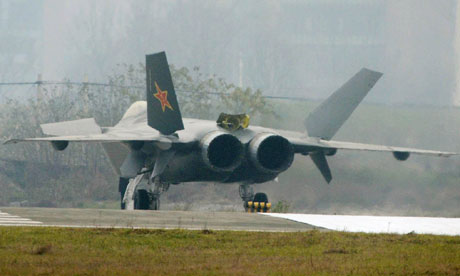
In recent years and especially since 2011, China has prompted several major military projects. These include for example several types of aircraft under development, among which are especially relevant the J20 and J31.

These two prototypes make China, along with the U.S., the only other country which has two models of flying 5th-generation aircrafts. Russia, the third runner in possession of this technology, is developing only one model. The rest, none.

But nothing exemplifies a superpower more than its force projection capabilities. That's where come into the picture the submarine and aircraft carrier forces the Chinese navy (PLA) is developing.

Both platforms are the spearhead of any modern army. They are the ones that allow a country’s forces to be deployed rapidly anywhere in the world and until now it is what so far has lacked the Chinese army.

However the Chinese still have many years of development ahead of them to even get closer to the American potential, let alone surpass it. But the mere fact that they are providing the basis for this kind of military power has more than one brain concern in Washington.

In their favor plays something else. China doesn’t seem to want to follow the militaristic model of the United States and Russia. Surely its armed forces will continue to go abroad on an exponential basis as its influence grows. But mainly it will be for maneuvers and for humanitarian missions -something they could not do during the 2004 tsunami but learned in time for the disaster of Fukushima.

This strategy fits well with the soft power approach that China has historically exercised and exercises today in Africa, Latin America and Asia. A power that was tested in Libya, when it was forced to evacuate the large population of Chinese expatriates working there in the oil and gas industry.

The high demand for energy and resources has made China open to the world to find them. Mongolia, Australia, Venezuela and Uganda are among the countries that have benefited from Chinese soft power commercial contracts.

The case of the African country is particularly striking. In a country where until recently infrastructure was nonexistent, today you can make your way through the jungle in wide six-lane highways. Even Top Gear presenters were surprised when they saw them in the Africa special. It is the Chinese gift to Africa in exchange for their resources.

But China has shown it is also willing to play aggressively. And when we talk about today’s battlefields of economics and business, the aircraft carriers are the international companies and submarines are the rating agencies.

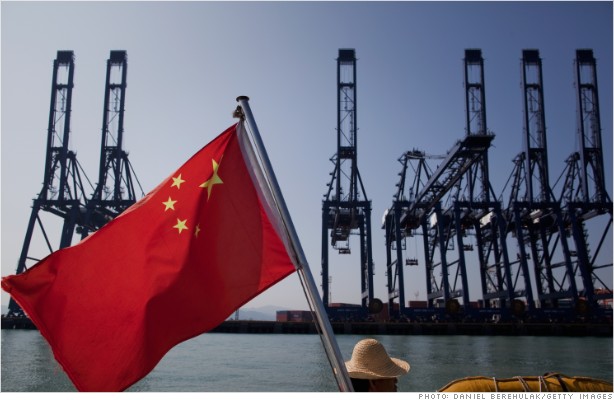
The Asian giant has also begun to enter with authority into these areas. Chinese companies have been for years expanding themselves into the Western market, either by geographical reach (like the introduction of Chinese goods in Europe) or acquisitions of Western companies (like the purchase of Volvo).

Meanwhile, back in May China established its first Chinese rating agency together with Russia to counter Moody's and S&P, both American and highly criticized, also from the European Union, for being biased and pro-US interest.

However, if the Asian giant is truly to become a globally dominant economy, it still has a lot of homework to do.

The main problem that China has is the same that has allowed it to create so much so fast: it is the country of the copy. Early in its development, copycats served the Chinese industry to get a head start. However, they have become accustomed to it.

A recurring theme among expatriates in China is the lack of imagination of local subordinates. They know to follow orders and they know how to copy, but they are unable to create and innovate.

Their initiative is reduced with a generation that has grown up in the shelter of not having to think about anything, just engineer retroactively or follow the instructions from blueprints purchased in questionable conditions or stolen from a foreign server. A lack of initiative that is worsened by the internet censorship.

Of course there are people who innovate, but the results are... let’s say that far from perfect. The best Chinese products today are still based on other foreign projects. When China becomes the lead of the pack, they will encounter a serious problem of innovation.

The rest of the world is now also better protected against copying. An employee of a Spanish aeronautical company told me how on a visit of potential Chinese investors they had to isolate them so they could not see or copy anything. They went as far as blocking office windows that faced the factory grounds and test labs and took off the network the computers the Chinese investors used.

The energy hunger problem, on the other hand, will curb the Chinese industry’s growth. Despite the large planned investment in nuclear power plants, to maintain the current level of production growth, China would need to increase by 50% the consumption of coal. Something that will involve both environmental and economic difficulties.

Also, many Chinese still believe today that the best future for their children is outside of China. Without a winning mentality in China, it is difficult to create a leader country. This extent is joined by the problem of an aging population that is going to be increasingly older. The one-child policy has endangered Chinese generational takeover.

Despite all this, and even if only because of its demographic weight, China is bound to have an important role this century. Their elites know this and they are preparing the ground with the military build-up. Meanwhile, America is in decline, running away from a world police role.

It is also happening on the political level; China is building-up influence, venturing into issues that had not mattered before to Chinese officials, like the conflict between Israel and Palestine. To interfere in a regional issue so far from its area of ​​influence is a clear sign of the dominant role that China is called to exercise. Whether America likes it or not.

Sunday, June 23, 2013

The new old superpower (I)


The decline of the U.S. as a lone superpower looms on the horizon. China comes pushing hard. Sometime between 2015 and 2020, depending on whose analysis you rely on, the Asian giant will become the world's largest economy.

In a time where soldiers have given way to traders and territorial invasions to company takeovers, that means power and control.

It has been a relatively short journey for China. Its economic evolution has been exponential in the last three decades. Back in 2003, China was the world's sixth largest economy. In 2004 it overcame France. In 2006 it was the turn for the United Kingdom to bite the dust. In 2009 fell Germany. And in 2011 Japan gave away the silver medal. Now only the US stands in the way to the top.

Today, China leads the ranking of population by country. But also in the number of internet connections, energy consumption per capita and the country vehicle fleet. These factors -its huge population and huge domestic market- are what have allowed the country to grow at an average rate of around 10% annually.

This growth has gone hand in hand with the Chinese increase in the life quality index. The Chinese live in general way better now than just a decade ago and have gained in that time what others countries accomplished over half a century. On average, their wages have grown too 10% annually since 2006.

Something similar has happened with the development of the industry. In twenty years it has seen a fast pace industrial revolution that in Europe and the U.S. lasted for over 200 years. Today it is the largest manufacturer in the world of all kinds of goods.

Contributing to this explosion was the massive rural migration to the cities. 120 million Chinese people have left behind the fields to sit behind machines at factories in huge new cities with the population of entire countries.

It also helps its industry that China controls the production of rare earth metals, essential elements for all kinds of modern electronic devices, from mobile phones to washing machines.

The economic boom and rapid development has brought unique situations. It has extremes that to the foreign eye cause shock and awe. As the good replicators they are, the Chinese took what they wanted from the capitalist system -the economy- and what they wanted from the communist system -the administrative organization- creating a quirky cocktail, which is unique and sometimes extremely wild.

The communist legacy makes the Chinese bureaucracy extremely dreaded, especially by expatriates working there. It is a mixture of communist-era rules and timid liberal openings as difficult to navigate as a maze. Moreover, that same mixed bureaucracy makes sometimes the capitalist economy to have to bend around stupid or wild assumptions, creating a result that is neither capitalist nor communist but a mixture of the worst of both.

A clear example of this are the nail houses. In the 60s, the communist government could expropriate land at will paying very low compensation. With the introduction of private property laws in 2007, the owners won some bargaining power. 

This led to stupid situations. Throughout China there are examples of residents who refused to sell their homes and builders built everything from shopping centers to roads around them. The results are simply surreal in most of the cases.

However, one of the things that the Chinese have learned to do extremely well is to protest. Sometimes their voices are heard, sometimes not.

In recent years, the environmental issue has been a continuing focus of protests: the depletion of aquifers, pollution of the air or the cancer villages are just a few examples.

Corruption, human rights and civil rights have been at the center stake as well, this last one a field where the artist Ai Weiwei has been its most prominent spokesman in recent years.

However, advances in both environmental issues and human rights and civil rights issues have been timid. The Chinese government considers both a collateral damage that it is willing to take if in exchange progress is achieved.

That is not the case with corruption, an area where Beijing’s government seems to be starting to consider more seriously.

Inside its own country, the Chinese government has been concerned to make clear to its own citizens that the global importance of the country has increased. The architectural mega-projects like the world's largest dam, the highest altitude railway or one of the longest bridges in the world have put China once more in the map.

But not only concrete jungles drive Chinese pride. Since it hosted the Olympic Games in 2008, China has come to control them in the arena in the latest edition in London. In addition, part military, part civilian, the Chinese indigenous space program is a feat that few countries can boast.

This increasing prestige has been joined with the increase in living standards. Higher wages have made the Chinese tourists the biggest spenders outside its borders and, therefore, the most desirable. But also be the most problematic ones.

China has all the ingredients to become a great power. It already is one at the regional level. But doubt remains about whether it can be constructed also as a world superpower. 

Friday, June 21, 2013

Turkey and Brazil: the connections and the mismatches

Miles apart, they don’t share language, culture, religion or a common colonial past. But despite that, both Brazil and Turkey are under unrest at the moment. Citizen movements that mirror on the Occupy movement and the Arab Spring have flourished and are gaining momentum from Rio to Istanbul. But what makes them different and what do they share?

Differences

Where they come from and where they go to
Brazil and Turkey were never in the spotlight. They always have been important regional powerhouses, but they lacked the support of an important global player like the EU. However, in the past decade both countries have gained relevance and economical power of their own and now can fight as equals with the EU (Turkey) or even in a global scene (Brazil).

However, while Brazil is much more independent to act, Turkey must look closely its actions if it wants to join the EU. The backlash against the protests has not improved the prospects of accession to the Union for the Turks.

The flame and the spark that ignited the flame
In Brazil it always has been about money. It all started with a 10-cent hike in public transport prices. But soon it grew to cope with the widespread frustration over a whole set of economic issues, from high taxes to wasteful expenses for two major sporting events (2014 World Cup and 2016 Olympics).

CS Gas canister; made in Brazil, used in Turkey
In Turkey it always was about defending secularism. Sure, the spark of the unrest was the proposal to uproot some trees to redevelop the area into a mall -or a mosque. But deep within the protesters demands is the fear of a Islamisation of Erdogan’s government. Recent laws passed with restrictions on the sale and advertising of alcohol and an attempt to limit women's access to abortion are deeper roots into the protests than the roots of the trees in Taksim. 

In both cases, however, the initial spark that ignited the unrest was a mere catalyst of a reaction years in the making.

The countries’ leaders
The Turkish PM Recep Tayyip Erdogan has become the target of the ire of the protesters. They blame him and his party for his policies. The response from Erdogan has been a stronger crackdown on the protesters. It is now a very public struggle: Erdogan and his party against a myriad of other groups that include ecologists, LGBT rights supporters and Kurdish independentists among others.

On the other hand, Dilma Rousseff, a former leftist guerrillera who was imprisoned and tortured during Brazil's 1964-85 dictatorship, hailed the protests for raising questions and strengthening Brazil's democracy. Unlike Turkey's leader, Rousseff remains popular among many of the protesters.

Epicenter vs. dispersion.
Turkey has a clear HQ for its unrest: Taksim square. In Brazil it is a bit more distributed. Sao Paulo and Rio have held multitudinous demonstrations that travelled through the city. In the case of Turkey, it has been a fight -and a proper one- for the control of Taksim square, the symbol of the protest and where it all started.

Similarities
The protests started outside the capital
All the previous revolutions started and took shape in the country’s capitals. Tehran, Cairo, Athens, Madrid… Both Brazil and Turkey have administrative capitals that aren’t the main city in the country. And for both of them, it wasn’t in the capitals but in those others main cities where it all started. Rio and Sao Paulo in Brazil and Istanbul in Turkey have been from the beginning the beachheads for their countries revolutions.

A growing middle-class…
The fast growing economies in Brazil and Turkey have created a new middle-class that previously was really small. This new middle-class is better educated, better informed and more ambitious. The problem is that the upper tiers in the Turkish and Brazilian societies have won much more purchasing power than the middle-classes; thus widening the gap. This is the opposite to the case of Spain and Greece, where no one has won purchasing power (there it is a case of the middle-classes losing more than the upper tiers).

…but also growing inequality
Despite the economic growth, the gini index has gotten bigger for both of them. This shows the increasing inequality that the population in both Turkey and Brazil are facing. The gap between the top and the bottom is getting wider, and the scale is stretching so much that the space in between for the middle-class is endangered.

The police crackdown on protesters
Both unrests have been met with equal hard measures. Batons, water cannons, rubber bullets and gas canisters have been used by both governments to suppress the demonstrations. In an episode of twisted irony, protesters in Turkey discovered that the CS gas canisters used by the Turkish police were made in Brazil.


Both police forces have been also strongly criticized for the use of excessive force. In Turkey, the police union said that at least six policemen had committed suicide due to the stress that they were being put under. In Brazil, the video of a cop refusing to crack down on protesters and being fired on the spot by his superior has gone viral on YouTube.

Sunday, June 16, 2013

Old habits die hard


We live in a world radically different to the one from the Cold War era. In fact, that is a period of time that has been left behind by all of us. No more fear of a nuclear holocaust. In Hollywood, the bad guys are now Arab terrorists, not communist soldiers.

Even the age of the arms race has been overcome. Not only we are reducing our nuclear arsenals –except for you, Kim. The armies in general are shifting their priorities. The United Kingdom doesn’t put its emphasis anymore on nuclear submarines. The Russians are going the same way with their subs.

War has changed. You do not need large armies to fight with other nations’ big armies. Now different weapons are in demand. Remotely controlled drones, armored vehicles that resist homemade mines and guerrilla tactics for compact armies; those are the tactics generals want now.

Not even the United States wants to be a policeman of the world anymore. Its intervention in Libya was on par with the French. In Mali it only provided auxiliary forces. And when it comes to Syria, it's been trying to stay out of it for as long as it has been able to.

Of course, one thing is to want to abandon old habits and quite another one to do so. There are still vestiges of the Cold War that are very active. The most interesting one is the case of old fashion espionage.

During the 90s, the advancement of technology made spy agencies decide to spend less on information from human sources and more on their digital eyes. Satellites in orbit were giving all the information they felt they needed. However, 9-11 changed the paradigm and since then the human spies are living a second youth.

The latest episode, including the capture of an American CIA spy in Moscow, illustrates that little has changed. He wore various wigs, a compass, a blocker for radio signals (tin foil) and as the only element of the 21st century, a mobile phone.

It is not the only recent espionage case. In London, the death of former KGB agent Alexander Litvinenko has led some to believe that his former bosses were behind the poisoning with polonium.

Anna Chapman
Much more striking was the capture of Anna Chapman and nine other Russian spies in the United States. Chapman went immediately on to become a celebrity.

But there is one side of the resurgence of the Cold War times much less reported: the revival of reconnaissance flights. During the '60s, '70s and '80s, American and Russian aircrafts occasionally poked or even went into foreign airspace. It was a sort of cat and mouse game, whose purpose was to check whether the other’s defenses were alert or not.

Russia has returned to this game several times since 2012. Long-range bombers sporadically poke the Arctic and tested the patience of its neighbors. In this regard, Sweden has failed the test. It was not the first time that Russian aircraft entered its airspace and Swedes have failed to respond in time.

This strategy is probably part of another covert war that is beginning to take shape: the battle for the Arctic. But that's a story for another day.


Are you afraid? Well, this works in that way. First you do what scares you and it's later when you get the courage
Twitter Delicious Facebook Digg Stumbleupon Favorites More

 
Worldwide blog©, WGMreports© and the texts included here are copyright of Javier Garcia Marcos.
All the pictures used in this blog are property of their respective owners. Any innappropiate use of them is unintentioned. Any image or link used without permission will be removed.
Powered by Blogger