
6/16/2013

Ehiztari
We live in a world
radically different to the one from the Cold War era. In fact, that is a period
of time that has been left behind by all of us. No more fear of a nuclear
holocaust. In Hollywood, the bad guys are now Arab terrorists, not communist soldiers.
Even the age of the
arms race has been overcome. Not only we are reducing our nuclear arsenals
–except for you, Kim. The armies in general are shifting their priorities. The United Kingdom doesn’t put its emphasis anymore
on
nuclear submarines. The Russians are going the same way with their subs.
War has changed. You
do not need large armies to fight with other nations’ big armies. Now different
weapons are in demand. Remotely controlled drones, armored vehicles that resist homemade mines
and guerrilla tactics for compact armies; those are the tactics generals want now.
Not even the United
States wants to be a policeman of the world anymore. Its intervention in Libya
was on par with the French. In Mali it only provided auxiliary forces. And when
it comes to Syria, it's been trying to stay out of it for as long as it has been able to.
Of course, one thing is
to want to abandon old habits and quite another one to do so. There are still
vestiges of the Cold War that are very active. The most interesting one is the case
of old fashion espionage.
During the 90s, the
advancement of technology made spy agencies decide to spend less on information
from human sources and more on their digital eyes. Satellites in orbit were giving
all the information they felt they needed. However, 9-11 changed the paradigm
and since then the human spies are living a second youth.
The latest episode,
including the capture of an American CIA spy in Moscow, illustrates
that little has changed. He wore various wigs, a compass, a blocker for radio signals (tin foil)
and as the only element of the 21st century, a mobile phone.
It is not the only
recent espionage case. In London, the death of former KGB agent Alexander Litvinenko has led some to believe that his
former bosses were behind the poisoning with polonium.
 |
| Anna Chapman |
Much more striking was
the capture of Anna Chapman and nine other Russian spies in the
United States. Chapman went immediately on to become a celebrity.
But there is one side
of the resurgence of the Cold War times much less reported: the revival of reconnaissance
flights. During the '60s, '70s and '80s, American and Russian aircrafts occasionally
poked or even went into foreign airspace. It was a sort of cat and mouse game,
whose purpose was to check whether the other’s defenses were alert or not.
Russia has returned to
this game several times since 2012. Long-range bombers sporadically poke the
Arctic and tested the patience of its neighbors. In this regard, Sweden has
failed the test. It was not the first time that Russian aircraft entered its
airspace and Swedes have failed to respond in time.
This strategy is
probably part of another covert war that is beginning to take shape: the battle
for the Arctic. But that's a story for another day.
6/09/2013
Ehiztari
Last year set a new
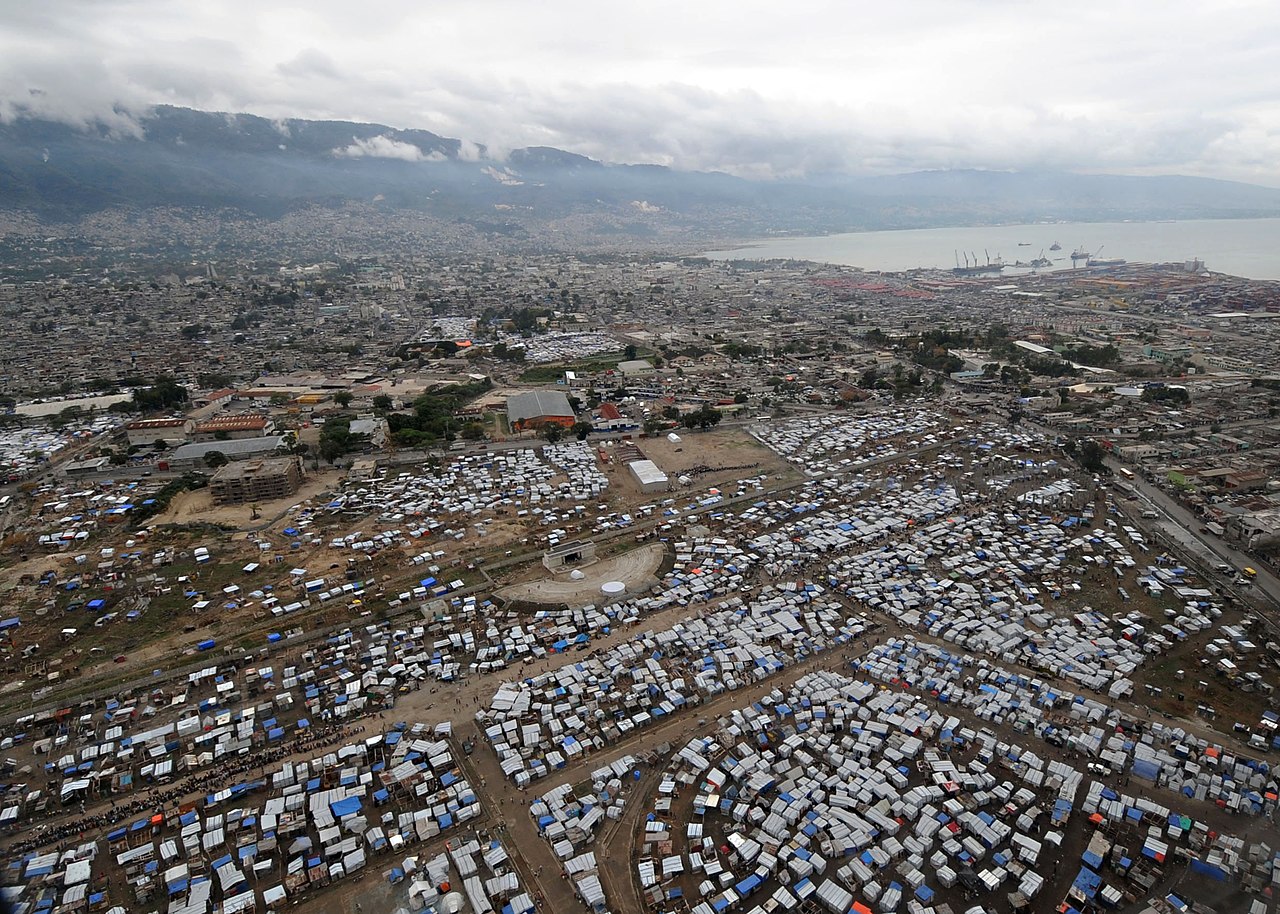
record in terms of people internally displaced (IDP) by violence. In total 28.8
million people have had to leave their homes around the world fleeing from armed
conflicts. Syria and Congo top the list.
The IDP’s situation is
even worse than that of refugees. For starters, the number of IDPs doubles that
of refugees. Unlike the refugees who leave their country of origin, the IDPs
remain in it.
However, this causes
many more problems for the internally displaced. For starters, their situation
is more precarious.
If it is a civil war,
such as in Syria, they are in danger of being caught by the same horror of
fleeing and relive the hell of having to escape again. Or in a crossfire.
In addition, refugees
enjoy international protection while the internally displaced people lack of it.
Syria takes the brunt
in terms of newly displaced. From a total of more than 3 million Syrians
internally displaced, two and a half were new from 2012.
The data gives a new
dimension to the words of Antonio Guterres, UN High Commissioner for the Refugees,
which has described the Syrian conflict as the greatest humanitarian catastrophe since the end of the Cold War.
In terms of total
numbers, Colombia is the country with the highest number of internally
displaced persons, most of them long term, followed by the aforementioned Syria
and the Democratic Republic of Congo.
 |
| Photo US Navy |
In fact, the
Sub-Saharan region, with over 10 million displaced, is the hardest hit area of
the world. Only in November 2012, more than 140,000 people left the Congolese
city of Goma after the rebel group M23 attacked the city.
No wonder, therefore,
that Africa is a pioneer trying to solve the problem of the displaced. In
December last year, 37 of the 53 countries that make up the African Union
signed the Kampala Convention. Some of them, however, still have
to ratify it.
The document contains
several basic rights of internally displaced persons and urges governments to
work to return them to their homes or reunite families divided by conflicts
among other things.
There is still much to
be done, however, as evidenced by the drama of the IDPs and refugees from
South Sudan. After
surviving the horrors of war, when they tried to return home they have been
found living in conditions even worse than those they had in the refugee camps.
6/02/2013
Ehiztari
That is why the north blames the south of being unfairly supporting
its load. The populations of Scandinavia and the UK, countries that until
recently welcomed and even demanded foreign labor, are beginning to see Southern
Europeans as a plague and xenophobic acts, although very rare, have increased.
In the last British
local elections, the conservative parties -especially the eurosceptic UKIP, but
also the tories of Prime Minister
David Cameron- have made a huge profit with the fear of European
immigrant.
In September, Cameron’s government will
implement more stringent controls for access to unemployment benefits and other
assistance. In fact, the European migration control has become a central issue in British politics.
The truth is that the influx of young people from Southern Europe puts even
more pressure on social systems that already bear a great burden. But the truth
is also that an increased immigration is not linked to an increase in
unemployment; that is a myth.
On the contrary, what really
is a threat to Europe is the possibility of a lost generation. Worldwide there are about 300 million young people who are neither studying nor working
-called NEET. Many of them do not even appear in the unemployment statistics
because they are long-term unemployed or have never worked.
It is a global phenomenon. So far, Southeast Asia and the
Middle East have led the ranking of number of NEETs. In fact, this was one of
the reasons for the outbreak of the Arab Spring. But Europe is moving closer to
these levels.
Greece tops the list with 64% of unemployed youth,
followed by Spain with 55%. In countries such as Ireland, over 300,000 people have emigrated in the last four years, of which
40% were under 25 years. For a country with a population of about six million,
that means that one in every four families has a migrant member.
The causes of this are
complex. Much has been made of the lack of coordination between what the labor market
demands and what universities produce. Also the digital divide has been on the table as a possible
cause.
 |
| Photo: Daily Telegraph |
But as this article explains, if there are not enough
people to fill certain jobs, those jobs’ salaries should have increased. It is
something that would be a logical consequence of the law of supply and demand.
However, instead of
increased salaries, we got inflation, rise of prices and freeze of wages.
Instead of becoming richer, the gap between poor and rich is widening and
mostly against the poor.
Another more possible
cause is the lack of foresight by the governments of Southern Europe. In
countries where investment in science and R & D is high and the government promotes
an entrepreneur mentality, such as Germany, Austria and the UK, the impact of
unemployment has been felt but not as drastically as in Spain or Greece.
Meanwhile, the
southern European countries enjoyed no safety net in case the construction and
tourism industries failed. After falling these two sectors have dragged with
them other more complex industries.
That is why today in
Berlin we can find queuing a waiter of the Greek islands, a bricklayer from Spain
and an Italian engineer, all together. An economy, an education system and a
mentality based on the first two dragged with them the third in their fall.
5/26/2013
Ehiztari
Two Israeli attacks on
Syria in less than 48 hours mean, at least unofficially, the entrance of the
West in the Arab conflict. Israeli incursions have not only complicated a conflict already
very convulsed. And as it happens with everything the Jewish state does, the
consequences of these actions will resound beyond its borders.
The attacks came from
outside Syrian airspace. According to both Reuters and AP, Israeli aircrafts
entered Lebanon from the south and from within Lebanese territory, they
released their weapons.
This fact highlights
the impunity of Israel in the region. It's not the first time that Israel
targets military objectives beyond its borders invading foreign airspace, nor
the first time it does it with Syria. It is not even the first time that Syria is the target since the beginning of its bloody
civil war.
Both Turkey and the Arab League
have strongly condemned the attack. On the other hand, the vulnerability of
Hezbollah and Syria has been highlighted. Again. Little or nothing can they do
against the technological superiority of Israel.
Tel Aviv in the
meantime neither confirms nor denies the news. All the information on the press
was leaked through anonymous sources, faceless informants and unidentified
spokespersons. The official stance is to deny the attack and to insist that
there is no interest in entering the Syrian conflict.
That last part may be
true. Assad, although an uncomfortable neighbor, is not a belligerent one. And
without doubt, the government of Bashar al-Assad is better than some of the
alternatives among the rebels, such as al-Nusra’s Islamists, who have been
linked to al-Qaeda.
 |
| Photo: IAF |
No one in Tel Aviv
wants another Islamist government in the region after the experience with Egypt.
In contrast, Syria's Assad is a controllable and controlled danger. The Syrian
government has limited itself to be an intermediary between Iran and Hezbollah.
And this is probably what has led to these attacks.
Israel's red lines in
this case are different to those for Obama. The United States does not want to get involved in Syria and puts the limit in the
use of chemical weapons, but deliberately does not specify how or how much is
too much.
For Israel, the red
line is the transfer of advanced military
equipment to
Hezbollah, and it does not mind getting into Syria as it has done for years. In
Wired, Noah Shachtman speculates that the danger comes not from the
type of missiles held by the Lebanese militia, but their numbers.
Currently Israel is
able to defend themselves from the threats in possession of Hamas with the Iron Dome missile defense system. For
the Fateh-110 Israel has another system, the Arrow-2, but unlike the Iron
Dome, it has not been tested in combat.
This is aggravated by
the fact that these systems are not foolproof and all they can achieve is minimizing
the impacts. They will never be able to avoid them altogether, that’s something
completely out of reach.
If Israel allows
arming Hezbollah with substantial amounts of Fateh-110 (which can also carry
chemical weapons), this further reduces interception rates. And it is enough for
one of the missiles to impact in an Israeli city to destabilize the whole region.
That may be the main
reason for Israel to get into the conflict. However, it is an extremely selfish
reason and their actions have consequences for more people than those in the
Jewish state.
To begin with, the Assad
regime has now the perfect excuse to demonize the rebels. According
to a spokesman of the regime, the rebels are "friends of Israel" and
the attack was made in a coordinated manner.
The UN has helped to
this extent, albeit involuntarily, by saying through Carla del Ponte that chemicals
attacks recently detected in Syria may actually have been the work of rebel militias. They later announced in a separate
statement that there are no definitive
conclusions yet.
Beyond Syria’s and
Israel’s borders, these attacks push the West into a war that it doesn’t want.
According to Robert Fisk, if there is no condemnation of the bombing means the de facto U.S. and European support for Israel's actions.
Obviously Washington
is not going to condemn the attacks. In fact Obama has already said that Israel
has the right to defend itself, without specifying further. Surely his
government is upset that Netanyahu did not inform in advance of the incursions,
but that will not change its official position.
The Israeli attack has
also polarized the Arab public. Except for Jordan, no other country in the area wants Europe and
America to send aid in the form of weapons and military equipment to the
rebels. Let alone to have a Western military intervention in Syria.
On the other side of
the world, the recent visit of Israeli Prime Minister to China has been the
perfect excuse for the Asian giant to begin the rehearsal of his role as a global superpower. Meanwhile,
the two former superpowers -the United States and Russia- continue to disagree in almost everything.
5/13/2013
Ehiztari
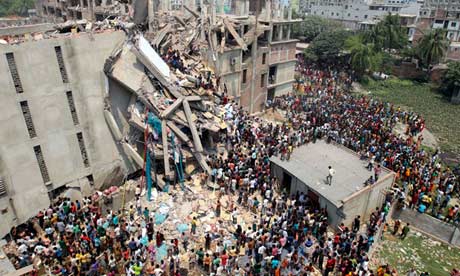
The recent tragedy in
Bangladesh, where a collapsed building left behind 1000 people dead, has oulined that our cheap
clothing is at the expense of human rights.
Thousands of people were
working at several factories in a building without sufficient security measures
and poorly preserved. The conditions for the workers were extremely precarious.
All this would have
been overlooked if the Rana Plaza had not collapsed. But the magnitude of the
tragedy (1000 dead and counting) and the massive demonstrations on May Day in Bangladesh, have made it
impossible to ignore the fact any longer.
Big retail names like
Zara, H&M, Benetton and Wal Mart have been involved. As happened with Apple
and its factories in China, fashion giants outsource to other companies in Asia
to make the clothes that they then sell across the world.
It is one of the effects
of globalization. Today, it is cheaper to send raw materials and finished products to
go around the world several times than to make them in factories in Europe or
America.
Competition is also
fierce. A few years ago China was the main recipient of these contracts. But
since the standard of living of the Chinese has increased, their wage demands
have risen in line with it. Chinese wages are growing around 10% per year and this increase means lower
profit margins for textile giants.
That's where, since
the beginning of the credit crunch crisis, other countries like Bangladesh have
entered in the race. Without as many legal obstacles and with wages of around a dollar a day, these countries are a much more
appealing destination for large retail companies.
The way of doing
things, however, does not change. They hire contractors and subcontractors.
Sometimes the subcontractors hire even more subcontractors. In fact New Wave
Style, one of the companies involved in the Rana Plaza disaster, got its first
big contract when a contractor for the Canadian company Loblaws could not cope
with an order and appealed to them. From there, everything grew until
disaster struck.
The chain of
contractors and subcontractors is dark. And the more you go down the chain, the
less control you have over what happens.
Companies such as Primark claim to have under control the companies they hire.
But the truth is that it is impossible to be aware of the whole process when it
is so complex and confusing.
The conditions are
extremely precarious for the workers. Overtime is common to be able to meet
deadlines, but it is rarely paid. The workplaces are often poorly conditioned. Too
much heat, little ventilation and buildings without sufficient security
measures are the norm.
The unions tried to
improve those conditions imposing independently controlled safety plans, but the big brands rejected the plan. They needed a plan outside of the
corruption circle between factory owners and the government. But it was too
expensive and complex and retail companies said no.
It is not the first
time a disaster strikes the industry. In fact fashion giants have a long
history full of stains. From the use of child labor for sports brands manufacturers
to the recent fire in another factory (also in
Bangladesh), scandals are many.
That’s why crisis
management teams in brands like Loblaws and Primark have been so quick to
tackle the tragedy. Immediately, they announced that they will compensate the victims. Others like Benetton
have reacted slower. Even the EU has jumped into the wagon.
Zara in turn, has
increased its positive presence in various media, with stories that illustrate,
for example, how it employs young people in Spain, a country battered by
youth unemployment.
The general trend of
the industry has been a PR offensive. Big brands know that their main
battle is being fought in the streets of Paris, London or New York, with the public
opinion at home. After all, they are also to blame in part for wanting cheap clothes.
They are the ones who buy the clothes and they are the ones they need to
convince to bury all this in the past –until the next tragedy.
Governments and
workers in Bangladesh, on the other hand, are too afraid they may lose all they got. The wages of workers in these
factories, despite being extremely low, are sometimes the best that can be dreamed
of in these countries.
Meanwhile, export
remittances provide a generous source of revenue to governments. So much so,
that the government of Bangladesh has asked the EU not to impose
sanctions or
regulations on his country. They fear that, like it happened in China, the
factories will relocate to a less problematic country.
However, Bangladesh
would probably be better off looking towards Vietnam. The communist country has shown that it is
possible to get the production for multinational brands and improve the living
conditions of workers all at the same time. But that demands change and courage
to do it.
And probably as well,
less profit margins and more expensive clothes. But not much. With as little as a 25cents increase in the price of our clothes, we could pay for better working conditions in Bangladesh. Will it happen?
Are you afraid? Well, this works in that way. First you do what scares you and it's later when you get the courage


 6/16/2013
 Ehiztari





 Twitter
 Facebook
 Flickr
 Posts
Posts


