Any questions? Contact us.

Sunday, January 27, 2013

Free James Foley


When you hear that a colleague has problems in a conflict zone a strange sensation invades you. It is that “It could have been me”. In my case, being in the process of withdrawing from journalism, it is a relief to think I won’t be in that place again. Neither me nor my loving ones, who in the end, are the ones that suffer most.

That however doesn’t save you from getting goose bumps. The last colleague in the list is James Foley, kidnapped in Syria almost three months ago. It isn’t the first time he faces this problem. Back in Libya, Gaddafi troops captured him and two other journalists and retained them for six weeks.

Photo: Nicole Tung
The case of Foley is a bit more personal than others. Although I haven’t meet him outside Facebook, I admire his work and moral heights. Last summer, James coordinated together with Manu Brabo a campaign to donate an ambulance for a hospital in Aleppo, Syria. Before that, he fundraised money for the children of photographer Anton Hammerl, killed during the capture of Foley, Brabo and Gillis in Libya.

James was kidnapped in Thanksgiving day near Idlib, when he was heading for the border. Little more is known. Nor who did it, why they did it or where is James now. His family has tried desperately to find information about him and raise awareness in the media with no results so far. The website www.freejamesfoley.org has an online petition for the release of the American journalist.

The kidnap of James together with the death of two journalists in Syria just during January highlights the dangers journos face in conflict areas. It’s becoming more and more frequent to hear these news, with kidnappings becoming a quick way of getting foreign attention or money.

Although journalists know what they face when in a war zone, the situation has escalated quickly. New journos, poorly trained in safety or without experience, but eager to get a foot in the door make it more dangerous. In addition to that, the media has gone from being collateral casualties to legit targets, as demonstrated in Gaza and Syria. A situation that far from improving, it’s getting worse.

Tuesday, January 22, 2013

Dissecting Mali


The year started strong with a French air and ground offensive in Mali. Although many cannot help but see parallelisms between what is happening in Africa and what happened in Iraq, the fact is that they are two different realities.

For starters, France had been called in by the Malian government itself and has the support of the UN and regional countries. However, it is not like they have a lack of reasons to be interested in rescuing them. From the rich uranium mines that feed the French "nuclear deterrence" to the fact that if al-Qaeda succeeds in the Sahara they would have a base of operations in Europe's backyard, just three hours away by plane. It all adds up.

To avoid greater evils, France has gone with almost everything they have in their arsenal, short of the very best. Apart from its aircraft carriers, nuclear weapons or tanks, everything else is represented in Mali. And despite that, they already got a slap in the face, with the death and display of the bodies of two French marines, a la Black Hawk Down in Somalia.

Photo: Joe Penney/Reuters
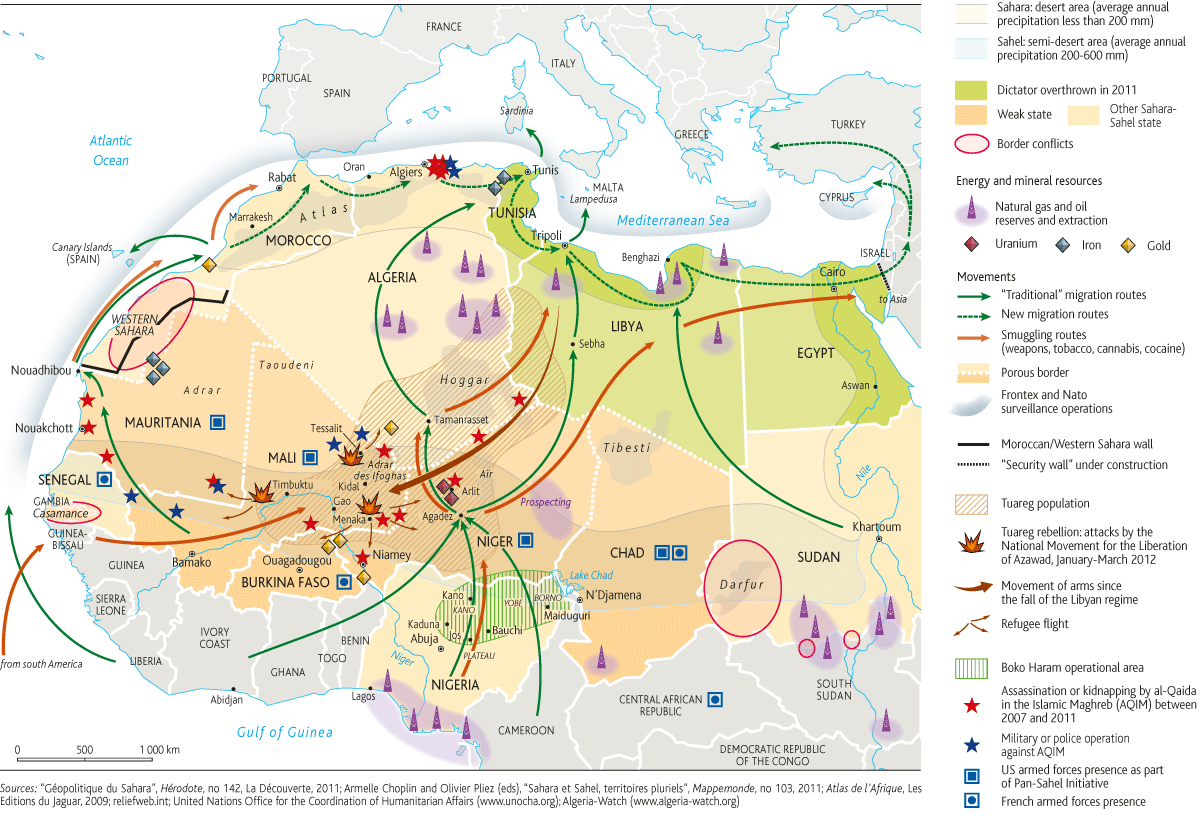
There is no wonder that Somali touches seep into Mali. Actually the West African country is just another front in a war that extends several thousand kilometers. It is a covert war, far from the newspapers’ leads, that has been fought for a decade and in which Mali becomes the third front. (See map below)

Starting in the east, the French base in Djibouti is also the home of several multinational squadrons fighting piracy off the coast of Somalia. What is less known is that it also has American drones that daily pound al-Shabab and other Islamist groups’ positions in Yemen and Somalia, even more frequently than they do it in Afghanistan and Pakistan. That is quite something.

A little further west we have a UN mission in Darfur, another one in the newly created South Sudan and one more in Chad, all of them with the presence of European or American soldiers. The later have created a vast intelligence network over the past five years, deployed in the area with their eyes put on Boko Haram.

Click to enlarge
Back in Mali, both Boko Haram al-Shabab are present, advising and assisting the rebels. Al-Qaeda in the Islamic Maghreb (AQIM) is actively coordinating with them and other Islamist groups like Ansar Dine.

Its potential danger is palpable and there are facts that confirm it, such as the recent kidnapping in Algeria of a gas plant and killing of hostages in the subsequent rescue operation. Sites part of UNESCO’s Human Historical Heritage like Timbuktu have been severely damaged by the religious extremism of these groups, in actions reminiscent of the blowing up of the giant Buddhas in Afghanistan by the Taliban.

Culture is not the only victim of these groups. After the war in Libya, the Tuareg -under the National Movement for the Liberation of Azawad (MNLA) - decided to join Ansar Dine and conquer northern Mali. After they got it, the Islamists ousted them from power and imposed Sharia law in the region.

The creation of an Islamist state in Mali is what most worries the West. After the withdraw in Iraq and Afghanistan -both left in a precarious state-, and the growing popularity of religious groups in Egypt, Libya and the Syrian revolution, the vision of a Sharia ruled belt ranging from Yemen to Mali both terrifies Washington, Paris and London and makes the wettest wildest dreams of the radical Islamists.

However, for now the U.S. and the EU have left France alone at it. The conflict can easily get stalled and nobody wants another Afghanistan now that they are getting out from there. The most they have committed is to provide transport planes, tankers and drones.

Moreover, the French have a better understanding of the area and it isn’t the first time they have gotten involved there. If someone has to go, it is just the natural thing to let the French do it.


------------------------------------------------------------------------------------------------------------
More: From the BBC, who is who in Mali.

Sunday, December 30, 2012

A second golden age for contractors


Three name changes, dozens of legal problems, two major disputes with the governments of Iraq and the United States and the resignation of its founder, would mean a disaster for any company. Not for Academi.

The company previously known as Xe and Blackwater -now bearing the “boring name” of Academi- has a bright future ahead. Or at least that is what one would think reading the report from an independent commission on the attack to the US embassy staff in Benghazi.

Both the independent commission and a Senate hearing have stated that the main problem was that the guards were foreign and unreliable. And both recommended either increase considerably the State Department personnel or hire external guards to take care of US diplomatic security abroad.

Considering the current austerity wave around the world, the first option is unlikely. That leaves the contractor option as the only one. Which in turn it means Blackwater -and other contractors. 

Blackwater guards
And it is a big cake to share: anything between $2.2 billion and $1.3 billion, depending on who you listen to -either the commission or Clinton talking to the Senate.

But that is not the only market for armed guards. Despite a widespread call against the NRA’s suggestion of putting armed guards in schools to prevent mass shootings, some Councils are already discussing the option. 

If passed, most towns don’t have the resources to pull police officers to patrol schools and it would mean another source of income for contractors. Even if it is only a matter of training guards and teachers, Blackwater may be in a good position to take advantage of it.

Tuesday, December 18, 2012

The gun country

After the last mass shooting in Newtown the debate about gun control has jumped to the frontpages again. And again, the people who never want to talk about it are saying that it is insensitive to talk now. “Too soon” they say.

The problem is that the shootings are pilling up. And just when the mourning period for the one in Portland was about to expire -and according to the NRA timeframes, it was ok to talk about it- Newtown came in.

As many people have pointed out, it is not that it is too soon to talk about it. In fact, it is too late. That should have been discussed before. One would think that after a Congresswoman was attacked, politicians -and the people- would have taken the matter more seriously. Nope.

Probably many people against gun control are afraid of the government taking the guns from their hands. But they need to understand, gun control doesn’t mean no guns, just a tighter and more controlled access to them and their use. And there are plenty of reasons to apply gun control.

A very common argument is that other factors like a deficient mental healthcare is to blame for mass shootings. Interestingly, many of the people who oppose gun control are closer to Republicans than to Democrats -not all- and they opposed as well Obamacare. Imagine what they would have to say about taxpayers’ money going into universal mental healthcare. Or into public schools so teachers and staff are more prepared to identify possible psychopaths.

It is not the only contradiction for Republicans. They resist the government control over gun ownership yet they insist in controlling communications, women’s bodies, gay marriages or immigrants. Selective freedom, it seems.

It is also interesting to note that while one isolated shoe bomber made widespread airport controls the norm, no matter how many mass shootings there are to convince people of the need for a debate on the issue.

Foreign examples of Switzerland and Israel are often cited as countries with lax gun control but both recently tightened the access to firearms. Australia long ago applied gun control and numbers talk for themselves. Japan's number of deaths are down to almost zero

The only other example of a country with permissive laws on the matter is Finland, who is the second -after the US- on mass shootings by civilians.

It is understandable the need for a militia -and therefore, the Second Amendment- in the post-independence America, but now it is just an anachronism. In my European mind it is impossible to conceive how citizens of the country with the biggest and most advanced army in the world feel so unsafe to be compelled to buy guns to defend themselves. Let alone, the need for semi-automatic weapons. 

Furthermore, if no one but the ones who must maintain the law and order were allowed to carry guns, there wouldn’t be a need to carry a gun for self-defense.

“That wouldn’t stop someone who wants to harm of doing it” say as another excuse pro-guns lobbies. Well, I have to agree with that one. Nothing, not even the tightest laws, will stop a determined enough lunatic. But at least the damage, the chances for it to happen or the frequency of the attacks wouldn’t be so great.

Take a firearm away from a psycho and they will find another way to do harm. But probably it will be a less harmful one, like a knife. Or a frying pan. Just on the day of the massacre a guy with a knife assaulted a school in China, stabbing 22 children. All survived.

So, how many more shootings until someone acts? Well, just today there was another one in Colorado with four people dead. And in the meantime, sales of firearms soared like previous times with the media not precisely playing a shoothing effect.


Thursday, December 13, 2012

This time yes


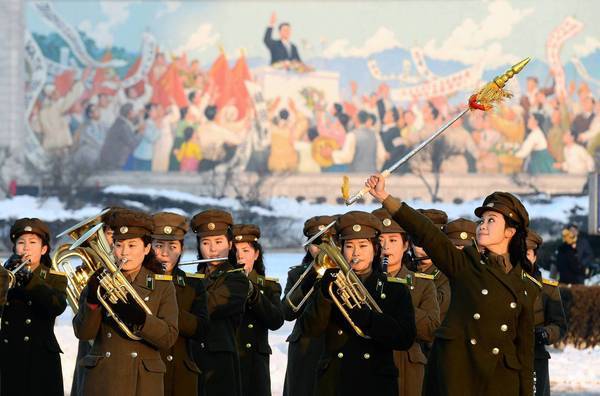
On Wednesday North Korea launched successfully -finally- a satellite into space becoming the 11th nation to achieve it. The date could not be easier to remember (12.12.12) and it is indeed a huge step forward for the Kim regime. 

Several details of the launch tell how the North Koreans have advanced. They finally got the third stage to separate successfully, which had been the major problem for the previous rockets -at least for the ones that survived more than a minute on the air.

They also managed to predict accurately where the boosters and debris of the rocket would fall -confirming the Philippines’ fears. This is more important than what it may suggest at first sight. For starters, that gives more control of the trajectory and destination for long-range rockets and for, namely say, a hypotetic successful future ICBM.

Photo: Kyodo News
But probably the biggest achievement was fooling half of the world -I have to include myself here- with their “delay due to snow” distraction. We knew it would eventually happen, but didn’t expect it that soon. If it was a trick to get the attention of the world, well, it worked.

All the eyes were on them. But when it finally happened only the region neighbors were kinda fast. Whiting minutes, Japan and South Korea had strongly condemned the action and were having a coordinated diplomatic effort.

That doesn’t mean they were expecting it either. The South Koreans said they never believed the delay and were confirming the reports. The Japanese, on the other hand, said they had their missile frigates locked on the rocket since it took off but didn’t press the fire button. Sounds like an excuse to me.

Europe and America were even slower to react. In the case of Europe, only the UK summoned immediately their ambassador. Fair enough, it was night time for them when the launch took place.

For the US, the embarrassment was even worse. It wasn’t until two hours after the rocket was launched that the Americans released a statement saying they had “noted” the launch. Like if it was a disturbance in the Force.

Images from the official DPRK channel confirming the launch -with special TV programs- and statements from the Japanese and South Korean governments were all over Twitter and Facebook. But the Americans had just “noted” it.
Photo: KCNA

Still, it is not like the Americans should be immediately worried. The DPRK may have put an object in space but it is unclear if that object is an operational sat. Also, although space rockets and ICBM share common tech, the later need twice as much work to develop.

To hit the space you just need for the rocket to go upwards. To hit a place half-way through the planet you need a thermal shield for the reentry and accurate trajectory calculations. It will take several years for the DPRK to build a successful ICBM.

Of course, UN sanctions will not help that development and most likely will follow after this attempt. Even China and Russia have criticized the bold move of the North Koreans.

However, no one has said anything on the UN about the mysterious American X-37B, launched intospace one day before the North Korean satellite. It is a USAF space-drone that the US says is purely experimental, while at the same time declining to disclose what those experiments are.


Are you afraid? Well, this works in that way. First you do what scares you and it's later when you get the courage
Twitter Delicious Facebook Digg Stumbleupon Favorites More

 
Worldwide blog©, WGMreports© and the texts included here are copyright of Javier Garcia Marcos.
All the pictures used in this blog are property of their respective owners. Any innappropiate use of them is unintentioned. Any image or link used without permission will be removed.
Powered by Blogger